
Suez Canal could be closed by Houthi attacks and Western economy shattered as Yemeni militia enter Iran war with attack on Israel
Suez Canal could be closed by Houthi attacks and Western economy shattered as Yemeni militia enter Iran war with attack on Israel
Yemeni rebels, supported by Iran, have launched a missile strike toward Israel, prompting fears that the Suez Canal may soon face disruption. Experts warn that this development could signal a broader regional conflict, with the Houthis potentially targeting critical shipping routes and endangering global trade.
Israel’s military confirmed it successfully intercepted the missile, but the incident has heightened concerns about the militia’s involvement in attacks on maritime traffic. Analysts suggest the rebels could now strike vessels in the Bab al-Mandab Strait, a vital corridor linking the Red Sea to the Suez Canal, or even target the canal directly.
“The Houthis have ‘significant power’ and could threaten the Suez Canal, creating a second major choke point closed alongside the Strait of Hormuz,” said Mohamad Elmasry, a professor at the Doha Institute for Graduate Studies.
Such actions might lead to severe economic consequences, as ships navigating these routes could lose access to insurance and face increased risks. Meanwhile, over two dozen US troops were injured in Iranian strikes on a Saudi air base in the past week, including 15 wounded at the Prince Sultan air base on Friday.
Hostilities have expanded overnight, with strikes reported in Iran, Lebanon, Israel, and Bahrain. Israel has warned of escalating military actions against the Islamic regime, while US President Donald Trump hinted at possible troop deployment, a move Iran warned would carry heavy costs.
The Houthi rebels, having joined the conflict in the Middle East, are now poised to challenge shipping lanes. Their attack on Tel Aviv marks a shift in strategy, following previous strikes on Red Sea vessels during the Gaza war. This escalation could lead to further disruption, with fears of wider assaults on maritime infrastructure and even the closure of the Red Sea.
Footage from a mobile phone captured the aftermath of overnight strikes on a university in Tehran. The Iran University of Science and Technology in the Narmak neighborhood was hit in the early hours of Saturday, according to reports. A large water facility in western Iran’s Haftkel region was also targeted by US-Israeli forces, as noted by the Fars News Agency.
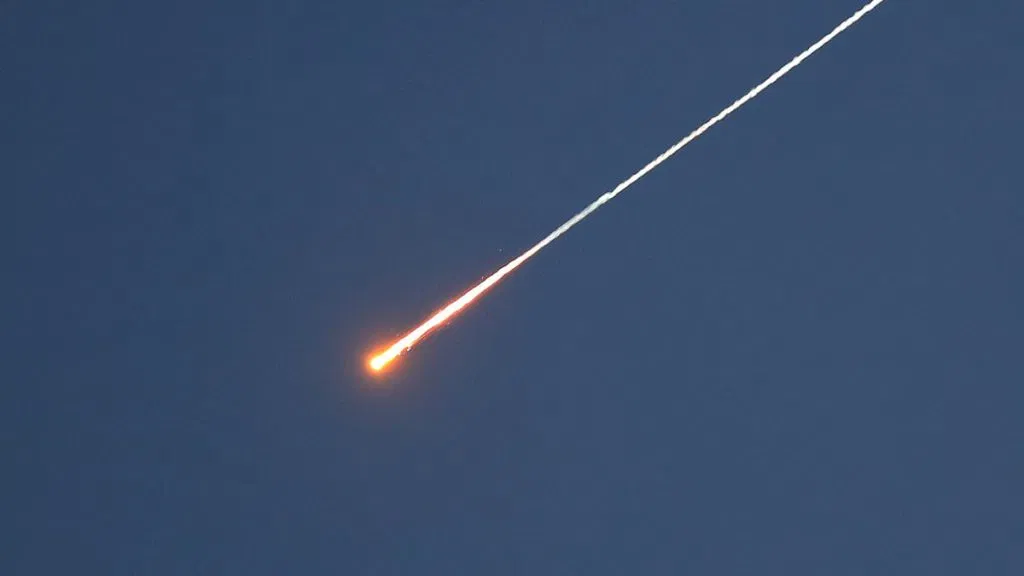
No injuries were reported at the Haftkel site, and water supplies remain operational. On March 28, 2028, streaks of light were observed above Ashkelon, Israel, during an interception attempt. In southern Lebanon, nine paramedics were killed today, raising the total number of health professionals lost in March to 10,000 cubic meters of water.
Brig Gen Saree, a Houthi military spokesperson, stated that the rebels would intervene directly if attacks on Iran and its allies continued. “Our fingers are on the trigger for military action,” Saree declared, emphasizing the group’s commitment to the conflict until all aggressions cease.
