
The ‘back door’ migrant route into Britain: Immigration crackdown as people smuggling gangs exploit soft border between UK and Ireland
The ‘back door’ migrant route into Britain: Immigration crackdown as people smuggling gangs exploit soft border between UK and Ireland
Alternative entry points targeted in border security operation
While the spotlight on illegal immigration often centers on small boat arrivals from France, criminal networks are increasingly using Britain’s Common Travel Area (CTA) with Ireland as a hidden pathway. This agreement, allowing free movement between the UK and Ireland for citizens, has become a focal point for organized crime.
Authorities have noted that the CTA is being used by illegal migrants and smuggling groups to bypass traditional border checks. To address this, a multi-agency operation was launched, resulting in the detention of 32 individuals at UK-Ireland ports and airports.
Technology deployed to strengthen border control
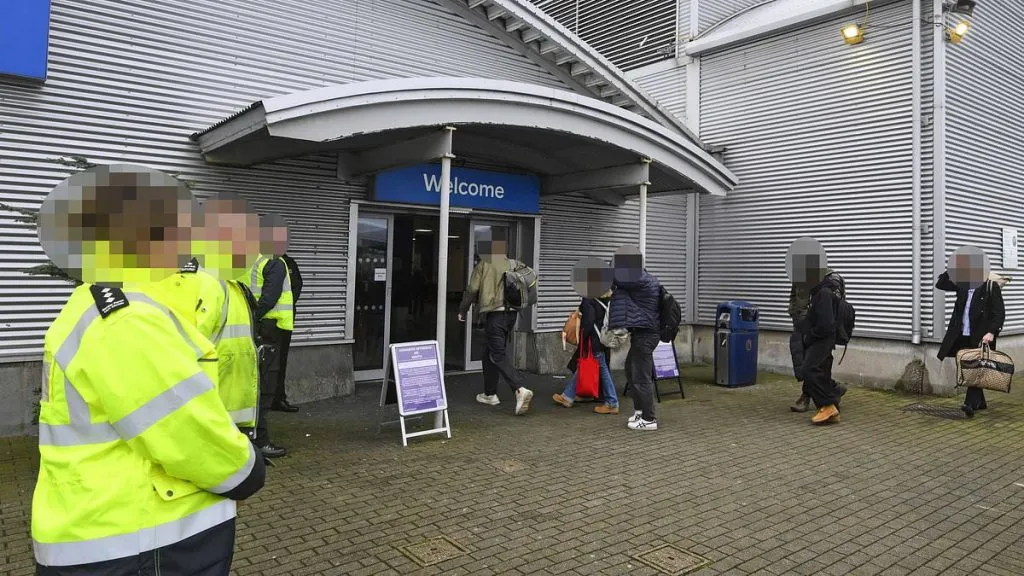
During the crackdown, live facial recognition was a key tool. At Holyhead ferry terminal, passengers had their faces scanned against a database of known immigration offenders. The system automatically captures facial features, comparing them to existing watchlists for matches.
Officers also searched lorries entering the port, with checks conducted alongside a motorway outside the town. This intensive operation involved collaboration between Immigration Enforcement, Border Force, and regional police forces, coordinated by DCC Wendy Gunney.
“The Common Travel Area is exploited by criminal gangs as a back-entry route into the UK, so our operation is about making our borders as robust as they can be,” said DCC Gunney. “Creating a visible presence at the border is a good deterrent and we’ve been using live facial recognition technology as well.”
While no passport control exists between Britain and Ireland, travelers are required to present photo ID. Regular spot checks help monitor compliance. Gunney emphasized that the threat from the CTA has grown, with efforts now focusing on securing all entry points.
Arrests and enforcement actions
Among those detained was a Lesotho national without valid UK entry, wanted by Irish authorities for domestic violence. He was promptly repatriated. Four Pakistani men arriving at Birmingham airport from Belfast were found to lack proper visas and had unresolved asylum claims, leading to the withdrawal of their applications.
In another case, an Indian man was stopped on the A55 motorway in North Wales. He was identified as a visa overstayer with a failed asylum application and suspected of working illegally for a delivery company. The Home Office plans to deport him, with potential fines for the employer.
Earlier this year, 14 Albanians were discovered concealed inside a livestock wagon entering the UK from Northern Ireland. These incidents highlight the growing challenge of monitoring cross-border movements, prompting a heightened focus on the CTA’s role in facilitating illegal immigration.
