
They were forced to hand one son over to the Israeli army in return for another. Eight months later he was dead in prison
They were forced to hand one son over to the Israeli army in return for another. Eight months later he was dead in prison
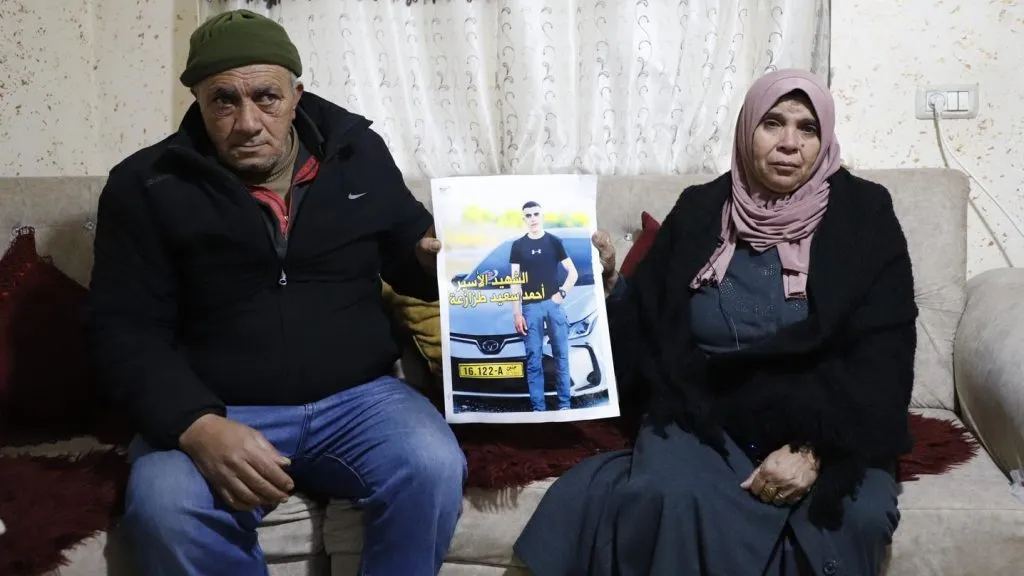
The Tazaza family in the northern West Bank town of Qabatiya now lives with deep sorrow and remorse after their youngest son, Ahmad, died in Israel’s Megiddo prison last August. His parents, still reeling from the loss, describe a harrowing sequence of events that led to his fate.
Ahmad, a 20-year-old with no prior health issues, was handed over to Israeli authorities in January 2025 in the occupied West Bank. His parents say they never understood why their son, the youngest of three brothers, was targeted. The circumstances of his arrest mirrored those experienced by thousands of young Palestinians under similar conditions.
According to his father, Saeed Tazaza, Israeli forces repeatedly raided their home in search of Ahmad, subjecting the family to threats and intimidation. “They smashed the house and destroyed everything,” said Najah Abdul Qader, Ahmad’s mother. “He was not at home; he was working at the market and sleeping there that night. They took his brother and father. In the morning, they released them and said, ‘We want him’.”
“An Israeli soldier had threatened to bomb the house if Ahmad did not surrender himself,” Qader recounted. “He had narrowly escaped before by leaping from a car as it was crushed by a bulldozer.”
After failing to locate Ahmad, Israeli forces detained his brother again. “We were forced to hand him over,” said Saeed Tazaza. “His brother is married with two children. So we told Ahmad we wanted to see him. We caught him and took him.”
Delivered to the Salem checkpoint near Jenin with his other son, Ahmad’s parents handed him over. “He looked at us and I knew he would not return,” Qader said. “I felt he was not coming back when he turned his face and walked away.”
Initially, the parents believed they had saved his life. “I handed my son over because I was afraid for him,” his father explained. “I was afraid he would die. We were forced, and we handed him over. What could we do? This is our fate.”
They were told of his death by an International Committee of the Red Cross liaison officer. However, the ICRCHas not had access to Palestinians in the prison. The post-mortem report, dated August 8, revealed possible signs of a severe blood cancer condition, such as acute leukaemia or aggressive lymphoma. It noted that Tazaza was “reported to be healthy” at the time of his detention.
His prison records indicated he had suffered from diarrhoea and scabies, and had complained of a sore throat days before his death. On August 2, an on-call physician observed blood stains on his trousers. The report described his collapse during a clinic visit: “Mr Tazaza requested to go to the toilet and later collapsed to the floor, losing consciousness and vital signs. Resuscitation attempts were initiated, but despite intubation and CPR, he was pronounced dead.”
Despite the findings, the parents dispute the account. They were unable to visit Ahmad or communicate with him during his eight months in custody, relying instead on information from other prisoners. “I handed my son to my enemy,” Qader said. “But that’s it. We wanted to protect him.”
