
Understanding Photosynthesis in Plants: A Step-by-Step Guide
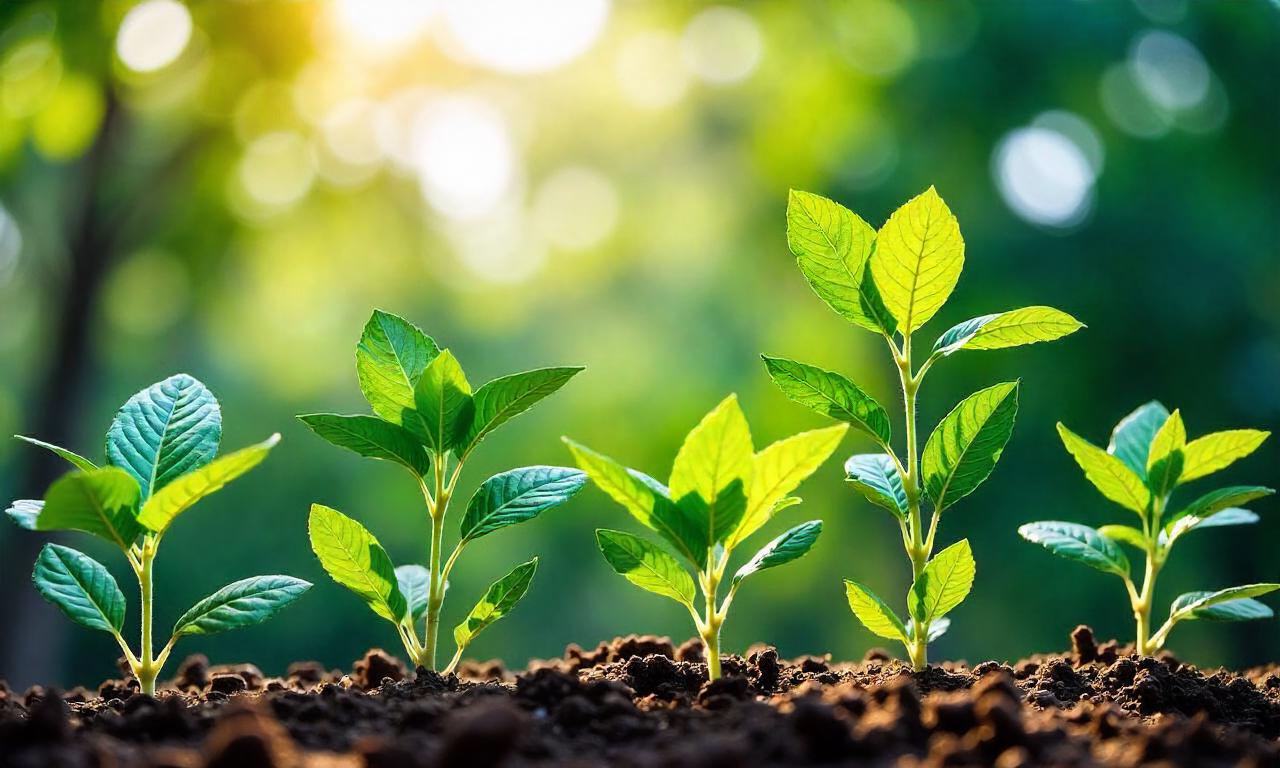
Photosynthesis is one of the most fundamental processes that sustain life on Earth. This natural phenomenon allows plants to convert sunlight, water, and carbon dioxide into energy-rich compounds like glucose, which are essential for their growth and survival. If you’re looking for a Panduan fotosintesis pada tumbuhan (Guide to Understanding Photosynthesis in Plants), this article will walk you through the science behind it, breaking down the process into clear, manageable steps. Whether you’re a student, a curious learner, or simply someone interested in plant biology, understanding how photosynthesis works will deepen your appreciation for the role of green plants in the ecosystem.
What is Photosynthesis?
Photosynthesis is the process by which plants, algae, and some bacteria produce their own food using sunlight. It is a biological process that not only fuels the plant’s growth but also supports the entire food chain. For the Panduan fotosintesis pada tumbuhan, it’s crucial to grasp the basic principles before diving into the detailed steps.
The Basics of Photosynthesis
Photosynthesis occurs primarily in the chloroplasts of plant cells. These organelles contain chlorophyll, a green pigment that captures sunlight. The process can be summarized by the equation: 6CO₂ + 6H₂O + light energy → C₆H₁₂O₆ + 6O₂ This equation shows that carbon dioxide (CO₂) and water (H₂O) are converted into glucose (C₆H₁₂O₆) and oxygen (O₂) through the absorption of light energy. The glucose produced serves as the plant’s primary energy source, while oxygen is released as a byproduct, enriching the atmosphere for other organisms.
The Two Stages of Photosynthesis
The Panduan fotosintesis pada tumbuhan should highlight that photosynthesis is divided into two main stages: the light-dependent reactions and the light-independent reactions (also known as the Calvin cycle). These stages work together to transform raw materials into usable energy.
– Light-Dependent Reactions: These reactions take place in the thylakoid membranes of chloroplasts. They rely on sunlight to split water molecules into oxygen, protons, and electrons. The energy from sunlight is used to generate ATP (adenosine triphosphate) and NADPH, which are energy carriers essential for the next stage.
– Light-Independent Reactions: Also called the Calvin cycle, this stage occurs in the stroma of chloroplasts. Here, carbon dioxide from the atmosphere is fixed into organic molecules using the ATP and NADPH produced in the previous step. The result is glucose, which plants use for growth, reproduction, and energy storage.
The Photosynthesis Process Explained
To fully understand photosynthesis, it’s important to explore the mechanisms involved in each step. This section will guide you through the Panduan fotosintesis pada tumbuhan in a structured way, ensuring clarity and depth.
Step 1: Light Absorption
The first step in photosynthesis begins with light absorption. Chlorophyll in the chloroplasts absorbs sunlight, which is then used to drive the chemical reactions. Different types of chlorophyll (like chlorophyll a and chlorophyll b) absorb light at specific wavelengths, allowing plants to maximize energy capture. Interestingly, plants have other pigments such as carotenoids that also play a role in <strong>light absorption</strong>, though they primarily assist chlorophyll by capturing light in different parts of the spectrum.
The energy absorbed by chlorophyll is transferred to reaction centers, where it powers the splitting of water molecules. This process, known as photolysis, produces oxygen and hydrogen ions, which are critical for the synthesis of glucose.
Step 2: Water Uptake and Transport
After sunlight is captured, water is drawn from the soil through the roots of the plant. This water is transported to the leaves via the xylem, a specialized vascular tissue. The water not only provides hydrogen ions for the chemical reactions but also plays a role in maintaining turgor pressure in plant cells, which is necessary for growth and structure. The process of <strong>water uptake</strong> is vital because without it, the <strong>photosynthesis</strong> process would stall. Roots absorb water through <strong>osmosis</strong>, and the movement of water is driven by <strong>transpiration</strong>, the evaporation of water from the <strong>leaves</strong>.
Once water reaches the chloroplasts, it is split into hydrogen ions and oxygen. This splitting is a critical part of the light-dependent reactions, as it provides the electrons needed for energy production.
Step 3: Carbon Dioxide Utilization
The third step in the Panduan fotosintesis pada tumbuhan involves the utilization of carbon dioxide. Plants take in CO₂ from the atmosphere through stomata, tiny pores on the leaves. These pores open and close to regulate gas exchange, allowing carbon dioxide to enter while minimizing water loss. The <strong>carbon dioxide</strong> is then transported to the <strong>chloroplasts</strong>, where it combines with <strong>ribulose bisphosphate (RuBP)</strong> in a process known as <strong>carbon fixation</strong>. This step is part of the <strong>Calvin cycle</strong> and is essential for building the <strong>organic molecules</strong> that form the basis of <strong>glucose</strong>.
During this phase, ATP and NADPH from the light-dependent reactions are used to convert carbon dioxide into glucose. This conversion is a complex biochemical process that requires multiple enzymes and intermediate steps.
Step 4: Glucose Production and Storage
The final stage of photosynthesis results in the production of glucose. This glucose is stored as starch or used immediately for energy. The byproduct, oxygen, is released into the atmosphere, making photosynthesis a key contributor to the oxygen supply on Earth. Plants store <strong>glucose</strong> in the form of <strong>starch</strong> to use during periods when <strong>photosynthesis</strong> is not possible, such as at night. This <strong>storage</strong> ensures that the plant has a <strong>steady energy supply</strong> even in the absence of sunlight.
Additionally, glucose is used to create cellulose, a structural component of plant cell walls, and other organic compounds like sugars and lipids that are vital for growth and reproduction.

Importance of Photosynthesis in Plants
Photosynthesis is not just a biological process; it is the cornerstone of plant life. For the Panduan fotosintesis pada tumbuhan, understanding its importance helps in appreciating how plants contribute to ecological balance and human survival.
Why Photosynthesis is Vital for Plants
The primary purpose of photosynthesis is to generate energy for the plant. Without this process, plants would not be able to grow, reproduce, or survive. The glucose produced during photosynthesis is used for cellular respiration, which provides the energy needed for metabolic activities. Furthermore, <strong>photosynthesis</strong> enables plants to <strong>produce oxygen</strong>, which is essential for <strong>aerobic life</strong>. This <strong>oxygen</strong> not only sustains plant life but also supports <strong>animals</strong> and <strong>humans</strong> in their <strong>respiration processes</strong>.
The byproducts of photosynthesis, such as oxygen and glucose, also play a critical role in nutrient cycling and climate regulation. For example, the oxygen released into the atmosphere helps mitigate the effects of greenhouse gases, while the glucose forms the base of the food chain.
Photosynthesis and the Ecosystem
The Panduan fotosintesis pada tumbuhan must emphasize how photosynthesis connects plants to the ecosystem. Plants are primary producers, meaning they are the first organisms to convert sunlight into usable energy. This energy is then passed through the food chain to herbivores, carnivores, and decomposers. The <strong>carbon dioxide</strong> absorbed during <strong>photosynthesis</strong> helps <strong>reduce atmospheric CO₂ levels</strong>, which is crucial for <strong>climate stability</strong>. Additionally, the <strong>organic compounds</strong> produced during <strong>photosynthesis</strong> support <strong>soil health</strong> by providing <strong>nutrients</strong> for <strong>microorganisms</strong> and <strong>plants</strong>.
The oxygen generated through photosynthesis is essential for aerobic respiration in animals and plants. This oxygen is also used in biological processes such as cell division and protein synthesis.
Factors Affecting Photosynthesis
While photosynthesis is a natural process, it is influenced by several environmental factors. For the Panduan fotosintesis pada tumbuhan, understanding these factors is key to optimizing plant growth and health.
Light Intensity
Light intensity is one of the most critical factors in photosynthesis. The rate of photosynthesis increases with light intensity up to a certain point, after which it plateaus. This point is known as the light saturation point. If <strong>light intensity</strong> is too low, the <strong>plant</strong> may not produce enough <strong>energy</strong>. Conversely, if <strong>light intensity</strong> is too high, it can cause <strong>photoinhibition</strong>, where <strong>chlorophyll</strong> becomes <strong>damaged</strong>, reducing <strong>photosynthetic efficiency</strong>.
The amount of light a plant receives directly impacts chlorophyll production and carbon dioxide fixation. For example, shade-tolerant plants have adapted to lower light conditions, while sun-loving plants maximize light absorption for optimal growth.
Carbon Dioxide Availability
Carbon dioxide availability is another factor that affects photosynthesis. The rate of photosynthesis increases with higher CO₂ concentrations, as more CO₂ provides more raw material for glucose production. However, <strong>excess CO₂</strong> can also lead to <strong>reduced photosynthetic efficiency</strong>, as it may <strong>inhibit</strong> other <strong>processes</strong> such as <strong>water uptake</strong>. This <strong>balance</strong> is essential for <strong>plant health</strong> and <strong>ecosystem stability</strong>.
The availability of carbon dioxide is influenced by environmental conditions such as temperature and humidity. For instance, higher humidity can reduce water loss, allowing plants to focus more on CO₂ absorption.
Temperature and Enzyme Activity
Temperature plays a significant role in photosynthesis. Enzymes involved in photosynthesis work best within a specific temperature range, known as the optimal temperature. If <strong>temperature</strong> is too low, <strong>enzyme activity</strong> slows down, reducing the <strong>rate of photosynthesis</strong>. On the other hand, if <strong>temperature</strong> is too high, <strong>enzymes</strong> can <strong>denature</strong>, leading to <strong>reduced efficiency</strong> and <strong>potential damage</strong> to the <strong>plant</strong>.
The optimal temperature for photosynthesis varies depending on the plant species. For example, C3 plants (like rice and wheat) perform best at moderate temperatures, while C4 plants (such as corn and sugarcane) are more efficient in high-temperature environments.
Water Availability and Its Impact
Water availability is a crucial factor in photosynthesis. Without sufficient water, the plant cannot absorb CO₂ or maintain turgor pressure, both of which are necessary for growth. The <strong>water uptake</strong> process is also <strong>affected</strong> by <strong>soil conditions</strong>. For instance, <strong>dry soil</strong> can <strong>reduce the rate of photosynthesis</strong>, while <strong>wet soil</strong> promotes <strong>efficient water transport</strong> and <strong>optimal growth</strong>.
Additionally, water stress can close stomata, limiting CO₂ intake and reducing the photosynthesis rate. This restriction can impede the plant's ability to produce glucose and survive in arid environments.
Conclusion
The Panduan fotosintesis pada tumbuhan has provided a comprehensive overview of how photosynthesis works, from the basic principles to the factors that influence it. By understanding the step-by-step process, you can appreciate the complexity of this biological phenomenon and its ecological significance. Photosynthesis is not only vital for plant survival but also for sustaining life on Earth. Whether you’re studying for exams, gardening, or simply curious about nature, this guide offers valuable insights into one of the most important processes in biology. Remember, the ability to convert sunlight into energy is what makes plants unique and essential for ecosystem health. So, take the time to learn about photosynthesis, and you’ll gain a deeper understanding of the natural world around you.
