
Alexander Butterfield, former top Nixon White House aide whose testimony transformed Watergate investigation, dies
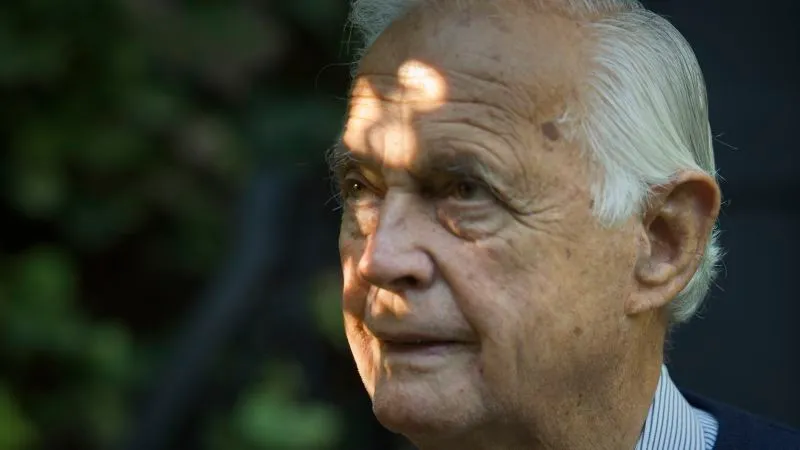
Alexander Butterfield, former top Nixon White House aide whose testimony transformed Watergate investigation, dies
Alexander Butterfield, a senior advisor to President Richard Nixon who unveiled the White House’s covert taping system and played a pivotal role in the Watergate scandal, has passed away at the age of 99. His wife, Kim, and John Dean, Nixon’s White House counsel during the crisis, shared the news with The Associated Press.
Butterfield, who served as a deputy assistant to the president, was instrumental in installing the secret recording devices in 1971, prior to the break-in at the Democratic National Headquarters. Nixon sought these tapes to document conversations and verify the accuracy of information, rather than depend solely on a notetaker. Microphones were placed throughout the Oval Office and other locations where presidential business occurred.
As the Watergate hearings progressed, Butterfield became one of the few Washington figures aware of the taping system. His knowledge surfaced when John Dean recounted an Oval Office conversation with Nixon, sparking congressional suspicions about the president’s ability to monitor meetings. This led to renewed scrutiny and a critical line of inquiry for future witnesses.
When directly questioned in July 1973, Butterfield confirmed the taping system’s existence, igniting a battle over the recordings. The Senate Watergate Committee and special prosecutor Archibald Cox both demanded access, prompting Nixon to attempt to block the release. This resistance culminated in the “Saturday Night Massacre,” where Attorney General Elliot Richardson and Deputy Attorney General William Ruckelshaus resigned in protest.
“Frankly, I don’t like being known as the man who revealed the existence of the tapes,” Butterfield stated in a 2012 Washington Post interview. “It makes it appear that I rushed to the committee and eagerly shared Nixon’s most classified information. In reality, I was caught in a difficult situation: I wanted to honor Nixon’s intentions while being truthful to the investigators. The way their questions were phrased made all the difference.”
Butterfield’s journey to the White House began in 1948 with his enlistment in the Air Force, where he rose to the rank of colonel and earned the Distinguished Flying Cross during his Vietnam service. He connected with Nixon’s chief of staff, H.R. Haldeman, during his UCLA years, which helped him secure a position in the administration. Initially, he struggled with the role but found his footing in 1969 after being relocated to Nixon’s inner circle.
Nixon later appointed Butterfield as Federal Aviation Administration administrator in 1972, a role he accepted after Senate confirmation. Just four months into his FAA tenure, he was called to testify about the taping system. Though not directly involved in the scandal, his testimony left a lasting mark. By 1974, as Nixon resigned, Butterfield’s standing was diminished, and he faced challenges in the Ford administration.
