
Is all complex life on Earth related to a concept from Norse mythology? Kind of
Is all complex life on Earth related to a concept from Norse mythology? Kind of
Researchers have uncovered new evidence about the beginnings of advanced life forms on Earth, linking them to a surprising element from Norse mythology. The breakthrough centers on Asgard archaea, a group of microorganisms that may hold the key to understanding how complex life evolved. Scientists now believe that these microbes’ adaptation to oxygen levels could explain the transition from simple single-celled organisms to more intricate life forms like plants, fungi, and animals.
The Great Oxidation Event and Eukaryotic Origins
Approximately 2.4 to 2.1 billion years ago, a dramatic shift in Earth’s atmosphere marked the Great Oxidation Event, which significantly boosted oxygen availability. This change coincided with the emergence of eukaryotes—organisms with cells containing a nucleus and other specialized structures. Microfossils from this period suggest that oxygen played a critical role in the development of complex life, though the exact mechanisms remain unclear.
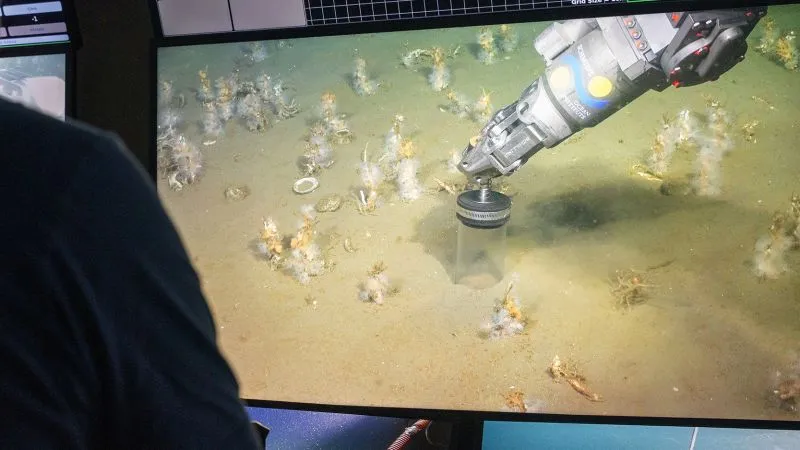
Until recently, Asgard archaea were found only in oxygen-poor environments such as deep-sea vents. This raised questions about their ability to interact with oxygen-dependent microbes to form eukaryotes. However, a new study published in Nature February 18 reveals that some Asgard lineages can survive and utilize oxygen, challenging previous assumptions.
“The fact that certain Asgards, our microbial ancestors, could harness oxygen aligns perfectly with this theory,” said Brett Baker, a marine science and integrative biology professor at the University of Texas at Austin. “As oxygen levels rose, these microbes adapted, gaining an energy edge that eventually led to the evolution of eukaryotic life.”
Asgard’s Mythological Legacy
Named after the realm of Norse gods like Odin and Thor, Asgard archaea form a superphylum. The first discovered group, Lokiarchaeota, was found near Loki’s Castle—a hydrothermal vent in the North Atlantic Ocean. Its discovery in 2015 sparked excitement, as it resembled the horned helmet of the Marvel god Loki, hinting at a deeper connection to complex life.
Further exploration of Asgard microbes has revealed additional phyla, some linked to other Norse deities. These organisms share genetic traits with eukaryotes, making them a potential bridge in the evolutionary timeline. Scientists now consider them a pivotal part of the story behind how microbes transitioned into more advanced life forms.
Uncovering New Pathways
Baker and his team analyzed DNA from diverse environments, including deep-sea vents and coastal regions, to trace Asgard microbes’ evolutionary paths. By comparing genetic sequences, they identified hundreds of previously unknown genomes, creating a detailed family tree. This work uncovered protein groups that hint at the microbes’ ability to process energy, a trait crucial for eukaryotic development.
The findings support the idea that oxygen availability was key to the rise of complex life. They also reinforce the theory that animals and other eukaryotes rely on oxygen-based metabolism for energy, connecting ancient microbial adaptations to modern biological functions. As the research continues, the role of Asgard archaea in this evolutionary leap becomes increasingly clear.
