
The new going-out spot isn’t a bar. It’s so much hotter than that
North America’s New Trend: Social Bathhouses as Hotspots for Connection
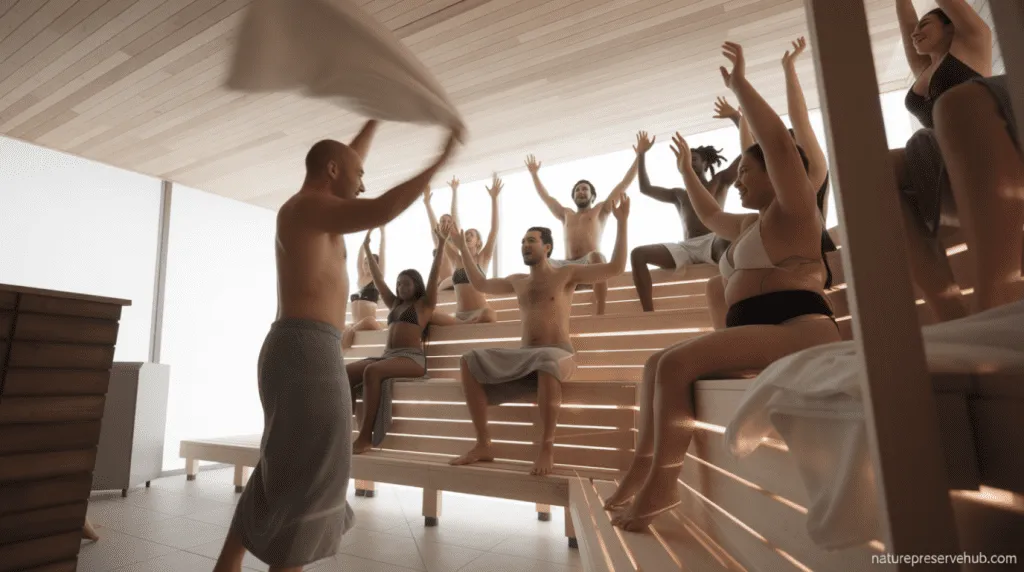
Montreal’s newest hotspot for socializing isn’t a bar or a club—it’s a sauna. As DJ Brinassa spun her pulsating house music, the crowd at RECESS Thermal Station, a circular wellness space, was already drenched in sweat. The venue, which launched in September, blends traditional sauna culture with modern entertainment, offering everything from DJ sets to cold plunges and icebreaker games. Attendees, dressed in minimal clothing, clung to the edges of the sauna, their bodies glowing under the club-style lighting. A shirtless staff member with intricate tattoos and layered necklaces moved rhythmically through the steam, waving a folding fan like a dance instructor.
Outside, the atmosphere was equally vibrant. Couples snuggled in plush seating near the DJ booth, while singles gathered for herbal tea and conversation. The mix of relaxation and social energy defines this wave of “social bathhouses,” which are redefining saunas as communal spaces for connection. These venues, from Montreal to New York City, are part of a broader movement across North America where wellness rituals have evolved into dynamic gatherings. “There’s a possibility of meeting new people. There’s a high energy, or vibe. You can dance,” explained Adam Simms, cofounder of RECESS, highlighting the blend of physical and social rejuvenation.
A Global Movement Rooted in Tradition
The concept of collective sweating isn’t new. From the Ottoman hammam to Roman thermae, communal bathing has long been a way to bond and relax. Robert Hammond, president of Therme US, notes that humans have always used heat to create shared experiences. “As soon as we were able to create heat, we were creating structures to sweat in together,” he said, pointing to modern expansions in Dallas, Washington, DC, and Toronto. However, the recent surge in social bathhouses reflects a deeper societal shift.
“In the pandemic, we had this monumental shift where we were in front of our screens all the time,” said Simms. “People understand that they need community, they need support, they need to be able to reenergize. I think RECESS and projects like it enable that.”
Mikkel Aaland, a Norwegian-American photographer and writer, has tracked this trend for decades. His 1978 book “Sweat” and 2023 documentary series “Perfect Sweat” explore how these rituals have shaped cultures. “It’s what I call a ‘long forgetting,’” he said, describing how communal bathing faded in the West as private indoor plumbing became the norm. Yet the last decade has seen a global resurgence, with modern interpretations like Oslo’s sleek floating saunas reviving ancient practices.
The Modern Revival
While RECESS and JOY Wellness Club in Philadelphia are part of the current wave, the trend’s roots trace back to 2022 with Othership, a Toronto-based bathhouse that merged wellness with events like stand-up comedy and sound baths. “The vision was a new form of socializing,” said co-founder Myles Farmer, emphasizing the post-pandemic desire to reconnect in person. Othership’s success has inspired similar ventures, including Bathhouse’s expansion to NYC and the upcoming Altar on Fifth Avenue, which will feature a 50-person sauna with the tagline, “Health as a cultural gathering space.”
These spaces aren’t just about relaxation—they’re about redefining how we interact. “There are a lot of people in these big cities who are not regularly having authentic connections with each other,” Farmer added. As the trend grows, it’s reshaping North America’s understanding of wellness, turning saunas into stages for community and creativity. Whether through herbal tea prompts or dance floor energy, the goal remains the same: to foster human connection in a world that often feels disconnected.
