
Iran says it will ‘irreversibly destroy’ Middle East infrastructure if US attacks energy sites
Iran says it will ‘irreversibly destroy’ Middle East infrastructure if US attacks energy sites
Escalation of tensions signals growing conflict in the region
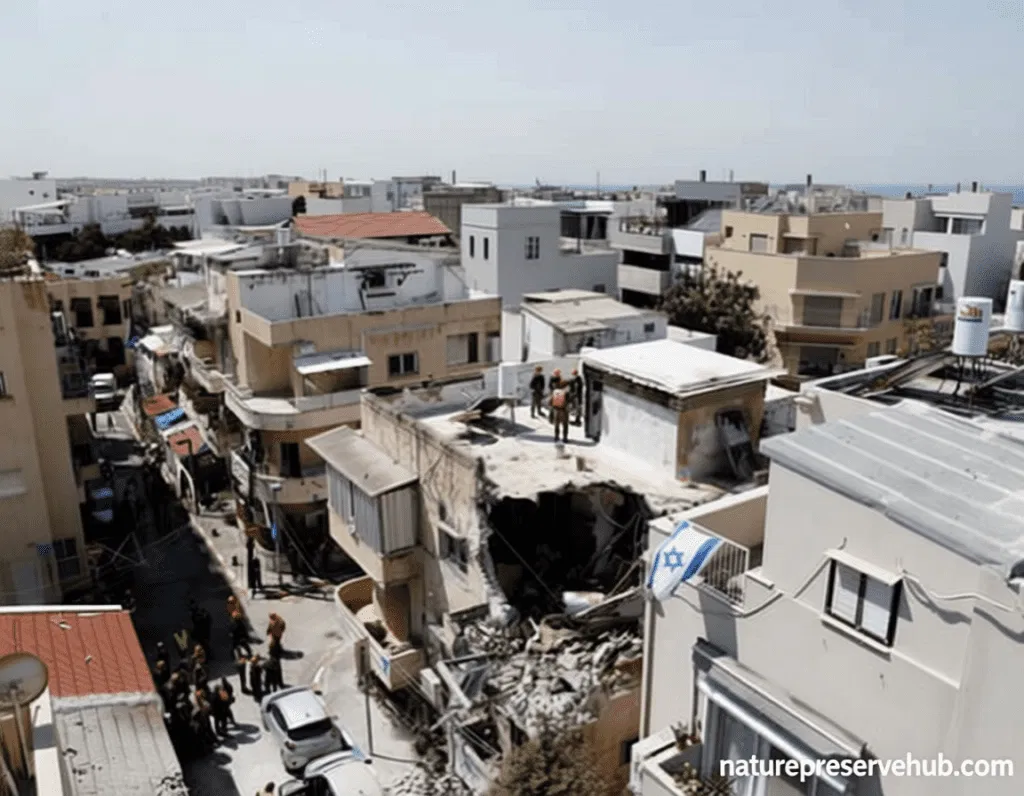
Tehran has warned of a “permanently damaging” strike on Middle Eastern infrastructure if the United States targets its energy facilities, following Donald Trump’s threat to “completely annihilate” Iranian power plants unless the Strait of Hormuz is unblocked within 48 hours. The warning came after Iranian missiles hit two southern Israeli cities overnight, injuring scores and damaging residential buildings, raising fears of a broader war escalation. This comes as the conflict in the Middle East, now in its fourth week, intensifies with attacks crossing borders and threatening regional stability.
Iranian leadership vows retaliation
Speaking on Sunday, Mohammad Bagher Ghalibaf, the head of Iran’s parliament, declared that “crucial infrastructure, including energy and oil facilities,” would be targeted as soon as Iran’s own installations were struck. The Iranian military’s command center, Khatam al-Anbiya, added that the Strait of Hormuz would be shut down entirely if the US proceeded with its threat, remaining closed until Iranian power plants were rebuilt. The statement also mentioned strikes on Israel’s “power generation, energy, and communication infrastructure,” as well as US bases and companies in the region.
“Threats and terror are only reinforcing Iranian solidarity,” said President Masoud Pezeshkian. “The belief that Iran can be erased from the map reflects the desperation of a nation resisting historical momentum.”
Strait of Hormuz under siege
Ali Mousavi, Iran’s envoy to the International Maritime Organisation, stated that the strait was open to all vessels except those associated with “Iran’s adversaries,” with passage coordinated through security agreements. However, Iranian attacks have effectively restricted traffic, halting nearly 95% of pre-war cargo. This disruption has triggered the worst oil crisis since the 1970s, pushing European gas prices up by 35% last week. Only a small fraction of ships from allied nations like China, India, and Pakistan are currently allowed to traverse the waterway.
Israel’s military faces intense pressure
Over 2,000 individuals have died since February 28, when the US and Israel initiated strikes on Iran. In retaliation, Tehran has targeted Israeli cities, including the towns of Arad and Dimona, where more than 200 people were wounded. Among the injured were two young children, both in critical condition. The Israeli army confirmed it could not intercept the missiles, marking the first time Iranian projectiles breached the region’s air defenses. Air raid alarms echoed across Israel on Sunday morning, signaling further attacks.
“We’re targeting the regime, the IRGC, and this corrupt network,” declared Prime Minister Benjamin Netanyahu during a visit to Arad. “We’ll go after their leaders, their facilities, and their financial resources.”
Retaliation and ongoing strikes
Israel announced plans to retaliate against Iran, with military forces set to strike Tehran. Meanwhile, a separate attack in Tel Aviv injured 15 people using cluster bombs. The series of strikes has intensified pressure on Israel’s air defense systems, with Iranian assaults increasing in frequency and scale. Iran attributed its attacks to a strike on its nuclear enrichment site at Natanz, which it claimed was carried out by Israel. The Pentagon in Washington declined to comment on the attribution.
