
US reportedly preparing to deploy thousands more troops to Middle East
US reportedly preparing to deploy thousands more troops to Middle East
The Trump administration is said to be mobilizing additional military assets in the Middle East, with three more warships and thousands of troops set to join existing forces. This comes amid criticism of NATO allies for their reluctance to support the reopening of the Hormuz Strait, a critical artery for global oil flow. Concerns over the economic fallout of the escalating U.S.-Israeli conflict with Iran have intensified, prompting Washington to explore bold strategies to assert control over the region.
Plans to occupy or blockade Iran’s strategic island
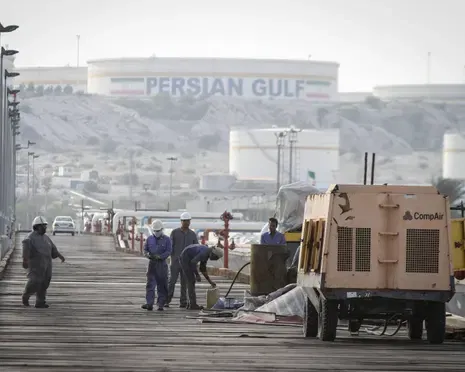
Reports suggest the U.S. is considering occupying or restricting access to Kharg Island, a vital oil export hub for Iran. Located just 16 miles from Bushehr in the northern Gulf, the island is home to a terminal that handles 90% of Iran’s oil shipments via pipelines from nearby offshore fields. The move aims to pressure Tehran into restoring the Hormuz Strait’s passage, but it risks significant confrontation, given Iran’s heavy reliance on fossil fuel revenues.
“We are watching your cowardly officials and commanders, pilots and wicked soldiers,” said Abolfazl Shekarchi, spokesperson for Iran’s armed forces, as quoted by state television. “From now on, based on the information we have on you, the promenades, resorts and tourist and entertainment centres in the world will not be safe.”
Despite earlier claims by Trump that he had no intention of sending “boots on the ground,” recent developments indicate a shift in strategy. The Pentagon has already dispatched the 31st Marine Expeditionary Unit, a force of around 2,200 marines, to the region. However, details about their specific missions remain unclear, and the USS Boxer, carrying the unit, is departing the U.S. three weeks earlier than planned.
Conflicting statements from Washington have characterized the conflict’s direction. A White House official acknowledged Trump’s assertion that no troop deployments were imminent but emphasized the president’s retention of strategic flexibility. “The United States military can take out Kharg Island at any time,” the official noted, highlighting the potential for swift action in a confined geographical area.
Escalating tensions and regional strikes
Violence in the region shows no signs of slowing, with Iran launching drone strikes against a Kuwait oil refinery and the U.S. and Israel targeting 16 Iranian cargo ships in Gulf port towns. A local official from Hormozgan province reported that the attacks left at least 16 vessels in flames. Meanwhile, Dubai experienced heavy explosions as rockets were intercepted by air defenses during the Eid al-Fitr holiday.
Separately, Israel conducted airstrikes on Syrian government targets, just days after U.S. officials had hinted at using those same forces to neutralize Hezbollah in eastern Lebanon. The shifting dynamics of the conflict have led to contradictory briefings, as the Trump administration struggles to manage its expanding influence and the associated economic repercussions.
With oil and gas prices climbing, warnings of a global economic crisis have grown louder. The war, now in its fourth week, continues to strain regional stability, underscoring the stakes of Washington’s increasingly inconsistent messaging. As the situation unfolds, the fate of the Hormuz Strait remains central to the power balance in the area.
