
Endangered Species Causes and Solutions Explained
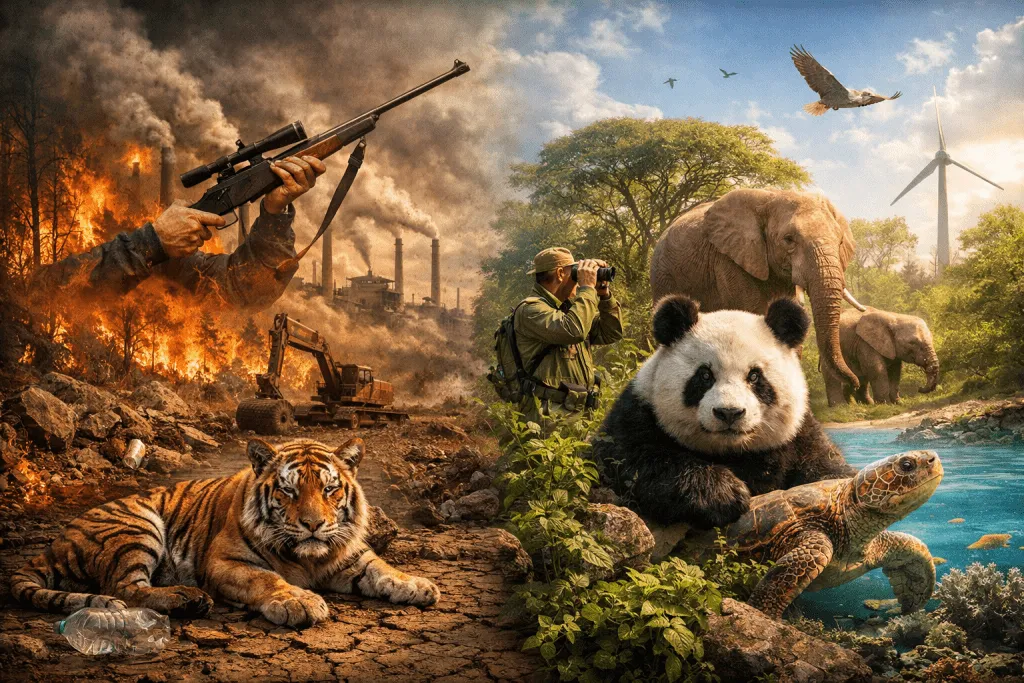
The phrase “endangered species causes and solutions” points to a practical question: why animals and plants are disappearing, and what actions actually reduce extinction risk. The reality is not complicated, but it is urgent. Species become endangered when human-driven pressures push their populations below a level where they can recover naturally. Understanding the true causes makes it easier to apply solutions that work at the ecosystem scale, not just as symbolic efforts.
What “Endangered” Really Means (and Why It Happens Faster Than People Think)
A species is considered endangered when its population has declined so severely that it faces a high risk of extinction in the near future. This can happen through a sudden collapse, like mass habitat destruction, or through slow decline over decades. Many species disappear quietly because their numbers drop in remote forests, oceans, and wetlands where monitoring is limited.
Extinction risk accelerates when a species has a slow reproductive cycle, limited geographic range, or depends on a specific habitat. For example, an animal that only breeds in one river system is far more vulnerable than one that can reproduce across multiple regions. Once a population becomes small, it can spiral downward due to reduced genetic diversity and weaker resilience to disease or climate shocks.
This is why the discussion around endangered species causes and solutions must focus on real-world drivers. A species is rarely endangered because of one single factor. In most cases, several pressures stack together until recovery becomes extremely difficult without intervention.
Habitat Loss and Fragmentation: The #1 Driver of Endangerment
The most common cause of endangered species is habitat loss. When forests are cleared, wetlands drained, coral reefs damaged, or grasslands converted into farmland, species lose the space and resources they need to survive. Habitat loss does not only remove shelter; it also removes food sources, breeding areas, and migration corridors.
A major overlooked issue is habitat fragmentation. Even if some habitat remains, it may be split into isolated patches by roads, cities, plantations, or fences. This breaks population connectivity, which reduces genetic diversity and prevents animals from moving to safer areas during droughts, fires, or seasonal changes.
For many species, the damage is not visible immediately. Populations may survive for a few years in shrinking habitat islands, then collapse once resources become insufficient. Effective solutions must focus on protecting large continuous ecosystems, not just creating small “green pockets” that cannot support stable populations.
Overexploitation: Hunting, Fishing, and the Illegal Wildlife Trade
Another major contributor in endangered species causes and solutions is overexploitation, meaning humans remove animals or plants faster than they can reproduce. This includes commercial hunting, poaching, overfishing, and harvesting rare plants for medicine, decoration, or collectors.
Illegal wildlife trade is especially destructive because it targets species already under pressure. High-value animals such as rhinos, pangolins, and certain big cats are killed for products sold across borders. The trade also harms ecosystems because removing one species can destabilize food webs and trigger cascading declines.
Overfishing works the same way. When fishing is too intense, fish populations collapse and may take decades to recover, if they recover at all. Industrial methods like bottom trawling also destroy habitats such as seabeds and coral structures, meaning the ecosystem loses both its species and its ability to regenerate.
Stopping overexploitation requires more than enforcement. It requires reducing demand, improving livelihoods so communities are not forced into illegal harvesting, and designing fisheries and hunting systems that follow strict sustainability rules.
Climate Change and Pollution: Threat Multipliers That Push Species Over the Edge
Climate change rarely acts alone, but it often turns a manageable problem into an extinction-level crisis. Rising temperatures shift habitats, alter rainfall patterns, increase wildfire frequency, and warm oceans. Species that evolved for stable conditions can fail to adapt fast enough.
Marine ecosystems are particularly vulnerable. Ocean warming and acidification weaken coral reefs, which are among the most biodiverse habitats on Earth. When corals die, thousands of dependent species lose their shelter and breeding grounds. In polar regions, melting ice destroys essential habitat for animals that rely on ice for hunting and reproduction.
Pollution works as another multiplier. Plastics, pesticides, heavy metals, oil spills, and nutrient runoff poison habitats and weaken animal health. Some toxins accumulate in the food chain, meaning top predators can suffer reproductive failure even when they are not directly exposed.
The key point is that climate change and pollution often interact with habitat loss. A fragmented habitat leaves no safe migration route. A polluted river leaves no healthy breeding ground. This is why endangered species causes and solutions must be addressed as connected systems, not separate issues.
Invasive Species and Disease: Silent Pressures That Spread Fast
Invasive species are organisms introduced into ecosystems where they did not evolve naturally. They often spread rapidly because they have no natural predators in the new environment. Invasive predators, plants, and pathogens can destroy native species that have no defenses against them.
Islands are especially vulnerable. When rats, cats, snakes, or invasive insects are introduced, native birds and reptiles can collapse quickly. Many island species evolved without predators, so they do not recognize threats until it is too late.
Disease is also increasing as habitats are disrupted and climate conditions change. Warmer temperatures can expand the range of parasites and viruses. Wildlife trade can spread pathogens across continents. Once a small endangered population is hit by a disease outbreak, extinction can happen in a short time.
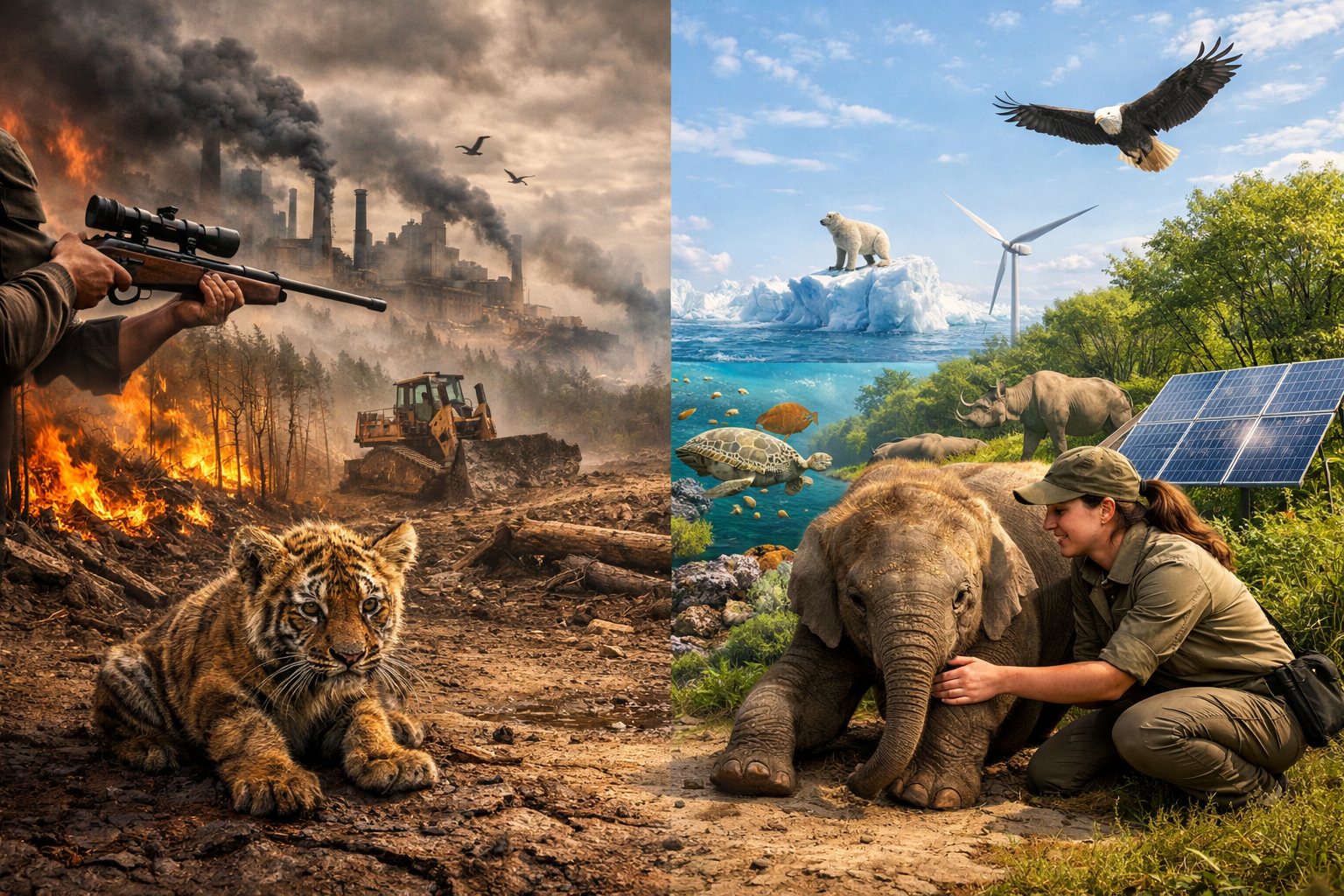
Solutions here depend on prevention and rapid response. Once an invasive species becomes established, eradication is difficult and expensive. Early detection systems, quarantine controls, and targeted removal programs are far more effective than late-stage cleanup.
Solutions That Actually Work: From Protection to Recovery
A strong approach to endangered species causes and solutions must combine prevention, enforcement, and ecosystem restoration. The first priority is protecting habitat at a meaningful scale. This includes national parks, marine protected areas, indigenous-managed lands, and conservation zones that block destructive development.
Protection only works when it is enforced and funded. “Paper parks” that exist on maps but have no staff, no monitoring, and no legal strength do not stop illegal logging or poaching. Successful conservation requires local governance, long-term budgets, and community participation.
The second major solution is restoration. Reforestation, wetland recovery, coral restoration, and river rehabilitation can rebuild habitats, but only when the original drivers of destruction are removed. Restoring a forest while allowing continued illegal logging is not restoration; it is temporary replanting.
The third solution is reducing direct killing and harvesting. This means anti-poaching operations, stronger border controls, wildlife crime prosecution, and demand reduction campaigns. It also means sustainable fishing rules such as catch limits, protected breeding seasons, and gear restrictions that reduce bycatch.
Finally, there is species-level recovery work. This includes captive breeding, reintroduction programs, genetic rescue, and emergency interventions for critically endangered species. These programs can be effective, but they are not substitutes for habitat protection. Saving a species in captivity is meaningless if the wild habitat is still collapsing.
How Governments, Companies, and Communities Can Share Responsibility
Endangered species protection is not only a wildlife issue; it is a policy and economic issue. Governments control land-use laws, protected area management, pollution regulations, and enforcement. Without strong legal frameworks, conservation remains optional and fragile.
Companies also play a major role. Supply chains drive deforestation, mining, and overfishing. If industries adopt traceability, sustainability standards, and habitat safeguards, the pressure on ecosystems drops significantly. This is especially relevant for commodities like palm oil, soy, beef, timber, and seafood.
Local communities are central to success. Conservation efforts that ignore local needs often fail because they create conflict. The strongest long-term results happen when communities benefit through sustainable livelihoods, eco-tourism that is managed responsibly, or direct revenue sharing from protected lands.
The most realistic model is shared responsibility: governments provide law and protection, companies reduce ecological harm, and communities gain stable incentives to keep ecosystems alive.
Conclusion
Endangered species decline because habitat is destroyed, wildlife is overexploited, ecosystems are polluted, climate change accelerates stress, and invasive species disrupt balance. The most effective endangered species causes and solutions focus on protecting large habitats, enforcing anti-poaching and sustainability laws, restoring damaged ecosystems, reducing pollution, and building community-centered conservation models that last.
FAQ
Q: What is the biggest cause of endangered species worldwide? A: Habitat loss and fragmentation are the largest drivers because they remove the space and resources species need to survive and reproduce.
Q: Can endangered species recover naturally without human help? A: Some can recover if threats are removed quickly, but many need direct intervention because their populations are too small or their habitat is too damaged.
Q: Why does climate change make extinction risk worse? A: Climate change shifts habitats, disrupts food chains, and increases extreme events like fires and droughts, pushing already-stressed species past their limits.
Q: Do protected areas actually prevent extinction? A: Yes, but only when they are large enough, properly enforced, and supported by long-term funding and local cooperation.
Q: What is the most effective solution individuals can support? A: Supporting policies and systems that reduce habitat destruction and illegal wildlife trade has the highest impact because it addresses root causes at scale.
