

Unlocking Energy’s Hidden Potential in the Gulf of America
How American engineers unlocked the impossible – Independence Day is more than a celebration of patriotic flags, parades, and fireworks. It is also a moment to reflect on the unyielding spirit of American innovation, which has repeatedly transformed the impossible into the achievable. From the birth of aviation to the triumph of space exploration, this nation has consistently demonstrated its ability to overcome daunting challenges through engineering excellence. Today, the same ingenuity is at work beneath the Gulf of America, where a groundbreaking energy breakthrough is reshaping the future of American energy production.
The Challenge Beneath the Sea
Deep beneath the surface of the Gulf of America lies a geological formation known as the Paleogene, a layer of sandstone and shale rock that holds tens of billions of barrels of oil. For years, this reserve was deemed unreachable due to its immense depth and the extreme pressures within it—up to 20,000 pounds per square inch, a force comparable to an elephant standing on a single quarter. These conditions pushed the boundaries of existing technology, making extraction a near-impossible feat. Yet, American engineers have not only met this challenge but have redefined what is possible in the offshore energy sector.
“TRUMP’S ENERGY INITIATIVES MAY FINALLY EXTRACT AMERICA FROM MIDEAST CHAOS”
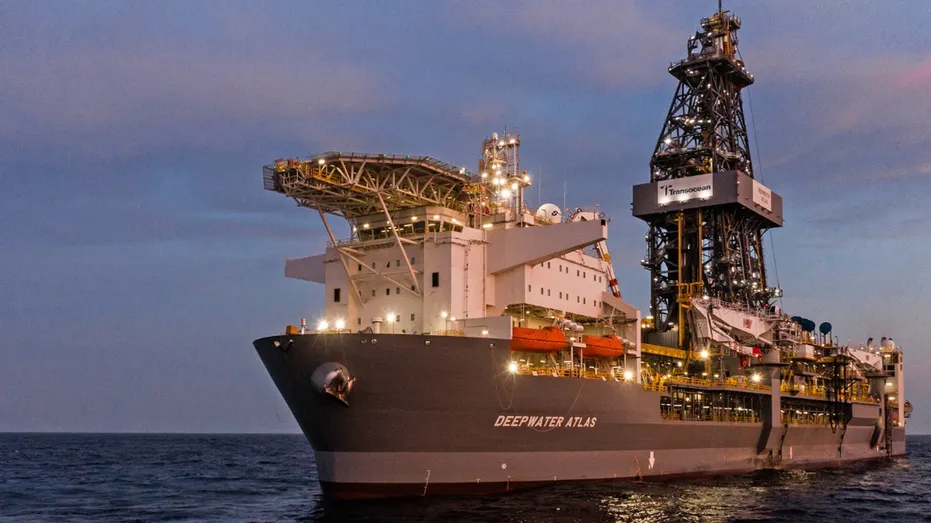
Now, over a decade of relentless innovation has led to the development of specialized equipment capable of operating under such extreme pressures. Companies like Transocean pioneered the design of drillships built for these conditions, with models such as the Deepwater Titan and Deepwater Atlas currently in operation in the Gulf. Meanwhile, Trendsetter Engineering crafted subsea systems and manifolds that function reliably in environments once thought too hostile for sustained activity. This collective effort has unlocked the Paleogene, proving that American engineering remains at the forefront of global advancements.
Building the Infrastructure for the Future
The success of these projects is not just a testament to technological progress but to the robust infrastructure and expertise that underpin American energy endeavors. Chevron’s Anchor project, which began production in 2024, exemplifies this achievement, requiring an investment of $5.7 billion to bring the Paleogene’s resources to the surface. Beacon Offshore’s Shenandoah operation similarly contributes to the growing output, while BP’s $5 billion Kaskida project has secured federal approval and is poised to begin its first phase of production. Together, these initiatives mark a new era of offshore capability, one that leverages decades of operational knowledge and a network of skilled professionals.
Behind these projects is a dedicated workforce spread across the Gulf Coast, encompassing engineers, subsea specialists, and vessel crews. Their collaboration has been instrumental in solving one of the most complex engineering puzzles in energy history. This team-driven approach is emblematic of the American model—a system where private companies, regulatory bodies, and workers unite to tackle challenges that others might abandon. The result is not only an abundance of energy resources but also a renewed sense of national pride in technological prowess.
“CONGRESS MUST NOT DERAIL THE FREIGHT RAIL LIFELINE FOR AMERICA’S FARMERS”
Safety remains a cornerstone of this progress. Every piece of equipment used in high-pressure environments is independently verified and rigorously tested under federal supervision. Offshore consortiums such as HWCG and Marine Well Containment Co. (MWCC) maintain 20,000 psi containment systems, ready to deploy at a moment’s notice in case of an incident. These systems are part of a comprehensive framework that ensures operators meet stringent safety standards, including detailed response plans and regular training exercises. The Bureau of Safety and Environmental Enforcement mandates third-party certification for all major components, from blowout preventers to subsea trees, ensuring that no operation begins without proven reliability.
What makes this achievement particularly significant is its broader impact. The Gulf of America now supplies roughly 15% of U.S. oil production, and offshore projects create jobs and investments spanning all 50 states. Shipyards, manufacturers, ports, and skilled tradespeople benefit from the sustained demand for advanced equipment and services. The Paleogene’s development also strengthens the nation’s energy independence, reducing reliance on foreign sources and bolstering economic resilience. This progress is a direct result of long-term investment decisions and the confidence that fuels them.
From Vision to Reality
Unlike singular government initiatives, the unlocking of the Paleogene was the product of a collaborative ecosystem. Engineers, regulators, suppliers, and workers worked in tandem to develop and implement solutions that have now become industry standards. This model reflects the core values of American innovation—flexibility, adaptability, and a commitment to excellence. It is a system that thrives on competition and ingenuity, allowing companies to innovate while ensuring public safety and environmental accountability.
The Paleogene’s success also underscores the importance of sustained effort. It was not a single breakthrough but a culmination of years of research, testing, and refinement. American engineers had to push beyond conventional limits, designing systems that could withstand pressures far exceeding those of previous technologies. Their work has not only created new energy opportunities but also set a benchmark for global offshore operations. This progress is a reminder that the United States continues to lead in solving the most difficult challenges, whether in space, under the ocean, or in the heart of its industrial infrastructure.
“THE PALEOGENE IN THE GULF OF AMERICA IS PROOF”
As the nation marks its founding, it is worth celebrating the latest chapter in its story of innovation. The Paleogene represents a new frontier, one that is supported by existing infrastructure and a deep well of expertise. It is a symbol of America’s enduring capacity to achieve the seemingly impossible, from launching satellites into orbit to drilling beneath the ocean floor. The ability to harness these resources is not just an economic triumph but a demonstration of national strength and self-reliance.
Looking ahead, the continued development of the Paleogene will require ongoing investment and collaboration. The American model has proven its effectiveness, but it needs support to thrive. With the right policies and funding, the offshore industry can sustain its momentum, ensuring that the United States remains a leader in energy production for generations to come. The Paleogene’s extraction is a powerful reminder that the country’s greatest achievements are born from the relentless pursuit of progress and the belief that no challenge is too great for American ingenuity.
CLICK HERE TO READ MORE FROM ERIK MILITO