
Hundreds of Rabbis Urge Mayor Mamdani to Apologize for AIPAC Criticism
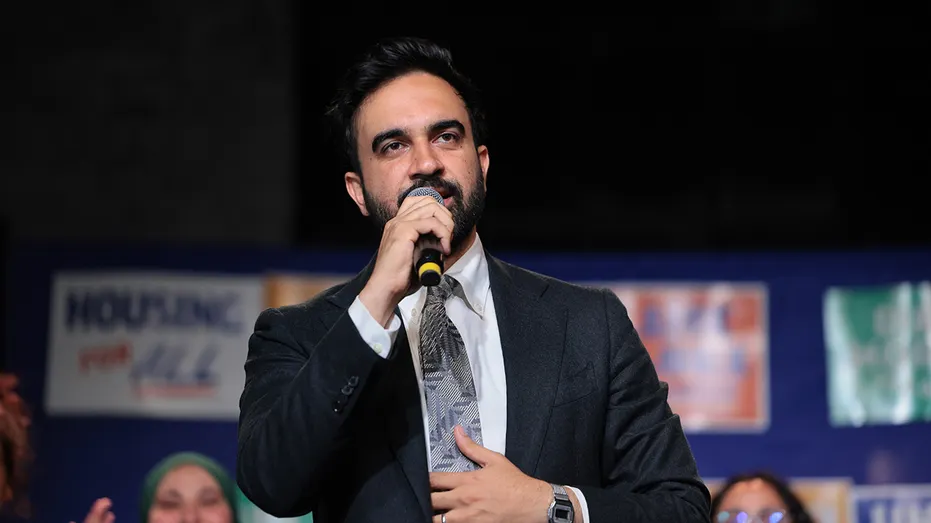
Hundreds of rabbis demand Mamdani apologize – Mayor Zohran Mamdani, the leader of New York City, has found himself at the center of a growing controversy after a coalition of over 700 rabbis called for his public apology over recent remarks that they claim dehumanized American Jews and their allies. The rabbis argue that Mamdani’s comments, made during a June 18 rally preceding the Democratic primaries, have amplified anti-Jewish sentiment by labeling the American Israel Public Affairs Committee (AIPAC) as “monsters” and accusing it of using “millions in dark money to accomplish a single goal—preserving their power so they can turn us against one another.” This rhetoric, they say, has created a sense of vulnerability for Jewish communities and their political supporters.
Antisemitism Concerns Spark Outcry
The backlash against Mamdani’s remarks has intensified, with a letter signed by numerous rabbis highlighting the potential for his language to exacerbate rising antisemitism in the United States. The letter emphasized that while the rabbis represent diverse perspectives on Israel, American politics, and the Gaza conflict, they unite in their concern that Mamdani’s characterization of AIPAC as “monstrous” could fuel prejudice. “By casting pro-Israel civic participation as monstrous, conspiratorial, and anti-democratic, Mr. Mamdani has put a target on the backs of American Jews and their allies,” the letter states. This sentiment was echoed by Jewish leaders beyond the rabbinic group, who condemned the remarks as dangerously simplistic.
“Mr. Mamdani’s words matter because they were spoken by the leader of the city with the largest Jewish population outside Israel. They matter because antisemitism in America is rising,” the letter reads.
The letter also criticizes Mamdani’s use of the term “monsters,” suggesting it undermines the legitimacy of AIPAC’s efforts to advocate for Israel. “This is the kind of bigoted conspiracy mongering you expect from unhinged streamers or white supremacists,” said Jonathan Greenblatt, CEO of the Anti-Defamation League, in a statement. “It’s not the language we should expect from the mayor of a city where antisemitism is at its highest levels.” Rep. Josh Gottheimer, D-N.J., further labeled the remarks as “prejudice” and “dangerous,” arguing that replacing “AIPAC” with “Jews” in the statement would align with the oldest antisemitic conspiracy theories. “This bulls— is dangerous,” he wrote on X.
Political Context and Defenses
Mamdani’s remarks have been tied to his broader political strategy, which has positioned him as a key player in the Democratic Party’s inner workings. After his allies swept the New York City Democratic primaries, the mayor has emerged as a prominent figure in shaping the party’s direction. In a May event, Mamdani defended his stance on antisemitism, stating that Jewish New Yorkers have “worked to cultivate a city that is safe and open to all.” He pledged the city would invest $26 million annually in expanding efforts to prevent hate crimes, emphasizing that “responding to antisemitism is not enough—deterrence is key.”
When asked about the criticism of his AIPAC remarks, Mamdani’s team cited a statement he made during an executive order signing ceremony. “We’re talking about a status quo where children are being killed on a daily basis,” Mamdani said, explaining his focus on the organization’s role in sustaining policies that prioritize stability over justice. “AIPAC has been supportive of this status quo, fighting any attempt to deliver safety to people in Palestine and much of the region.” He added that the term “monsters” was not limited to AIPAC, but applied to “super PACs at large” that spend vast sums on misleading campaigns.
Debating the Language and Its Impact
Mamdani’s defense hinges on the idea that his critique of AIPAC is part of a broader critique of political systems that perpetuate inequality. During the June 18 rally, he was questioned about the potential for his remarks to inflame tensions. He responded by citing the works of philosopher Antonio Gramsci, saying, “I used the term to describe all those who are preventing the birth of a new world.” This argument, however, has not quelled the controversy. Critics argue that the language is too blunt and risks painting all pro-Israel advocates as part of a unified, oppressive force.
The rabbis who signed the letter stress that their goal is not to silence debate but to protect Jewish Americans from being unfairly targeted. “We can debate policy. We can argue about money in politics. We can passionately disagree about Israel and the Middle East,” the letter notes. “But no elected leader should reduce a diverse community to a caricature of conspiracy and hostility.” The signers, which include dozens of New York rabbis and hundreds more nationwide, aim to demonstrate that the mayor’s remarks are not an isolated critique but part of a larger narrative that could alienate Jewish voters and allies.
Broader Implications for Democratic Politics
Mamdani’s comments have also raised questions about the role of AIPAC in shaping public opinion and policy. The group, which has long been a key advocate for U.S.-Israel relations, has faced criticism for its influence on legislation and media narratives. However, Mamdani’s use of the word “monsters” has drawn sharp rebukes, with opponents accusing him of oversimplifying complex political dynamics. His allies, who have gained momentum in the primaries, see the remarks as a strategic move to align with progressive voters while maintaining a platform to challenge traditional power structures.
The mayor’s team has defended the remarks by framing them as a necessary critique of an entrenched system. “AIPAC has been instrumental in maintaining the status quo,” Mamdani stated, “and it is this status quo that I will not accept.” This assertion has sparked a debate about the balance between critiquing powerful institutions and avoiding language that could be interpreted as anti-Jewish. As the Democratic Party gears up for the next phase of its strategy, Mamdani’s position on AIPAC may shape how he is perceived both as a leader and a potential kingmaker.
In the wake of the controversy, the focus remains on the need for clarity and accountability. The rabbis’ call for an apology is not just about correcting a misstep but about reinforcing the importance of Jewish voices in the political arena. “Jews and pro-Israel Americans are full participants in our democracy,” the letter concludes. “We must ensure they are not reduced to mere pawns in a larger, more sinister agenda.” With the mayor’s words resonating in both support and opposition, the challenge ahead is to navigate the intersection of politics, identity, and rhetoric without compromising the values of unity and inclusivity.
As the debate over Mamdani’s remarks continues, the broader implications for the Democratic Party—and for American Jewish communities—remain significant. The mayor’s statements have not only highlighted tensions within the party but also underscored the stakes of how political leaders frame their arguments. Whether his rhetoric is seen as a bold critique or a divisive attack, the impact of his words will likely echo in the coming months as the Democratic landscape evolves.