

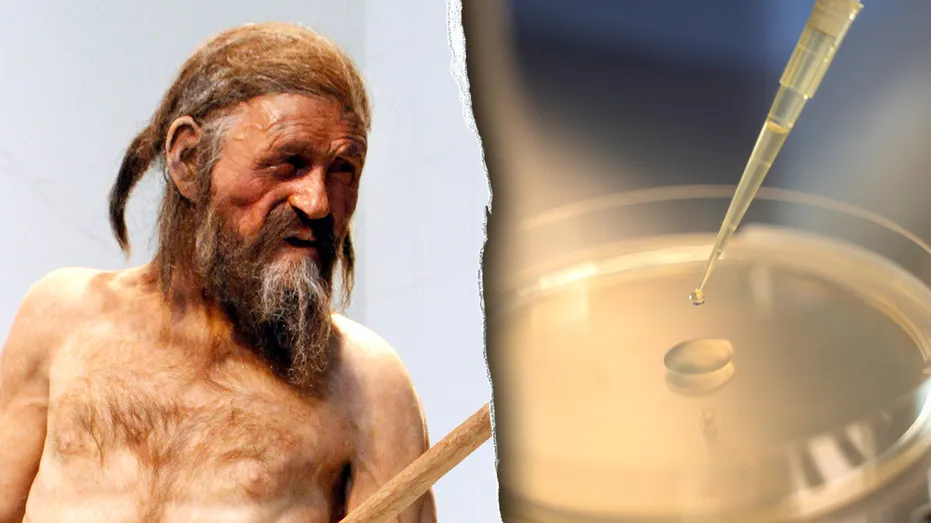
Scientists Discover Life Signs in 5,300-Year-Old Mummy
Scientists find signs of life inside 5 – Scientists find signs of life in the remains of a 5,300-year-old mummy, revealing groundbreaking insights into ancient microbial ecosystems. The study, published in Microbiome, focuses on Ötzi the Iceman, whose well-preserved body offers a rare glimpse into the biological processes of the Neolithic era. Discovered in 1991 by a hiker in the Alps, Ötzi’s remains have long been a subject of fascination due to their remarkable state of preservation. His age, dating back to 3300 B.C., surpasses that of Stonehenge and the Egyptian pyramids, making him a crucial archaeological specimen for understanding early human life.
Ötzi’s Life and Death
Ötzi’s death was initially believed to have resulted from exposure or exhaustion, but new findings suggest a more violent scenario. Researchers identified an arrowhead lodged in his left shoulder, indicating a fatal injury. This discovery, combined with evidence of blood and other wounds, implies he may have succumbed to a sudden attack. The study’s focus on his microbial composition adds another layer to the narrative, showing how life’s remnants can persist in frozen environments for millennia.
Microbial Legacy in Frozen Time
At the South Tyrol Museum of Archaeology in Bolzano, Italy, experts analyzed Ötzi’s tissues to uncover the survival of ancient microorganisms. The results reveal a complex microbial community, including cold-adapted bacteria and yeasts, that have thrived alongside his remains. These microbes, some of which may still be active, provide clues about the ecological conditions of his time. The study challenges assumptions about microbial dormancy, demonstrating that life can persist in extreme climates far longer than previously thought.
Advanced genetic sequencing techniques were employed to differentiate between microbes present during Ötzi’s life and those that colonized his body after death. This distinction is key to understanding how lifeforms adapt to harsh environments. The presence of glacial-origin yeast species further highlights the interplay between Ötzi’s body and the surrounding ice, which may have protected biological material from decomposition.
Unique Insights from the Gut Microbiome
One of the most remarkable discoveries is Ötzi’s gut microbiome, which contains bacterial strains absent in modern humans. This suggests his diet and environment were distinct from contemporary populations. The preservation of these microbes is attributed to the stable conditions of the glacier, which slowed decay and allowed for their survival. Scientists now see Ötzi not just as a historical figure but as a living archive of ancient biology.
Elisabeth Vallazza, director of the museum, emphasized the importance of ongoing conservation efforts. “The mummy’s condition remains remarkably stable, but we must continue monitoring to ensure his survival for future research,” she noted. This highlights the delicate balance between scientific investigation and preserving the integrity of ancient specimens, which may hold critical data about life in prehistoric times.
Microbial Activity and Ancient Mysteries
Researchers also detected genetic traces of active bacteria within Ötzi’s remains, defying the belief that all microbial life becomes inert after thousands of years. Marco Samadelli, a co-author of the study, explained that “some microbes could still exist in a dormant state, even after five millennia.” These findings could reshape our understanding of microbial resilience and their role in preserving organic material under extreme conditions.
While Ötzi’s discovery is unique, it aligns with other ancient finds that challenge existing historical narratives. For instance, recent studies on an ancient palace in Sparta have redefined the region’s development timeline, while debates over Noah’s Ark remnants in Turkey link geological data to religious myths. Such parallel discoveries underscore the enduring mystery of how life and artifacts endure across vast stretches of time.
The implications of this research extend beyond archaeology, offering new perspectives on microbial survival and human adaptation. Scientists find signs of life in Ötzi’s remains not only as a testament to his existence but as a window into the interconnectedness of ancient ecosystems. As Frank Maixner, director of the Institute for Mummy Studies, remarked, “Ötzi is a dynamic biological system, not just a static relic.” This perspective invites further exploration into the hidden lifeforms that have outlived their hosts for millennia.