
Teen Sailor’s Final Rest After 82-Year Journey Home
Teen sailor killed aboard USS West – On May 30, a 17-year-old sailor who died during the 1941 attack on Pearl Harbor will finally be laid to rest in his hometown of Plainview, Arkansas. His name, Royle Bradford Luker, will be honored with full military honors, marking a poignant reunion with his family and legacy. The burial ceremony will see him interred alongside his parents, including his father, a World War I veteran, as his obituary recounts. This moment of closure comes decades after his remains were first discovered and identified through modern forensic techniques and DNA analysis.
Legacy of Service and Sacrifice
Royle Bradford Luker served as a Fireman Third Class in the U.S. Navy aboard the USS West Virginia. During Japan’s surprise attack on Pearl Harbor on December 7, 1941, he gave his life in the line of duty, as noted in his obituary. The document also highlights the military accolades he earned, including the Purple Heart for injuries sustained in combat and the Navy Presidential Unit Citation for extraordinary heroism under enemy fire. These honors, alongside others, reflect his commitment to his country during one of its most defining conflicts.
“As a Fireman Third Class in the United States Navy aboard the U.S.S. West Virginia, he gave his all and was killed in the line of duty during the attack on Pearl Harbor, Hawaii, on December 7, 1941,” his obituary from Cornwell Funeral Homes stated.
The list of awards attributed to him includes the Gold Star Veteran designation, Combat Action Ribbon, Navy Expeditionary Medal, Navy Good Conduct Medal, Asiatic-Pacific Campaign Medal, American Campaign Medal, and the World War II Victory Medal. These accolades underscore the bravery and dedication he showed during the attack, which remains a pivotal event in American history.
A New Beginning for an Old Story
For nearly 82 years, Royle Bradford Luker’s remains were listed as unknown at the National Memorial Cemetery of the Pacific. His identity was finally confirmed on May 29, 2024, when the Defense POW/MIA Accounting Agency conducted DNA testing on multiple caskets, including his. This breakthrough allows his family to honor his memory in a way that was previously impossible. The teen sailor’s story is a testament to the enduring power of science and familial connection in resolving historical mysteries.
Royle’s father, George F. Luker, and mother, Nettie Estelle David Luker, were both central to this process. Their willingness to provide genetic samples was crucial in matching the remains to his identity. Family members, some of whom had lived in Arkansas during his deployment, expressed deep pride in his service. “He will now be returned home and laid to rest,” his obituary noted, emphasizing the significance of this long-awaited recognition.
The Attack on Pearl Harbor: A Forgotten Tale
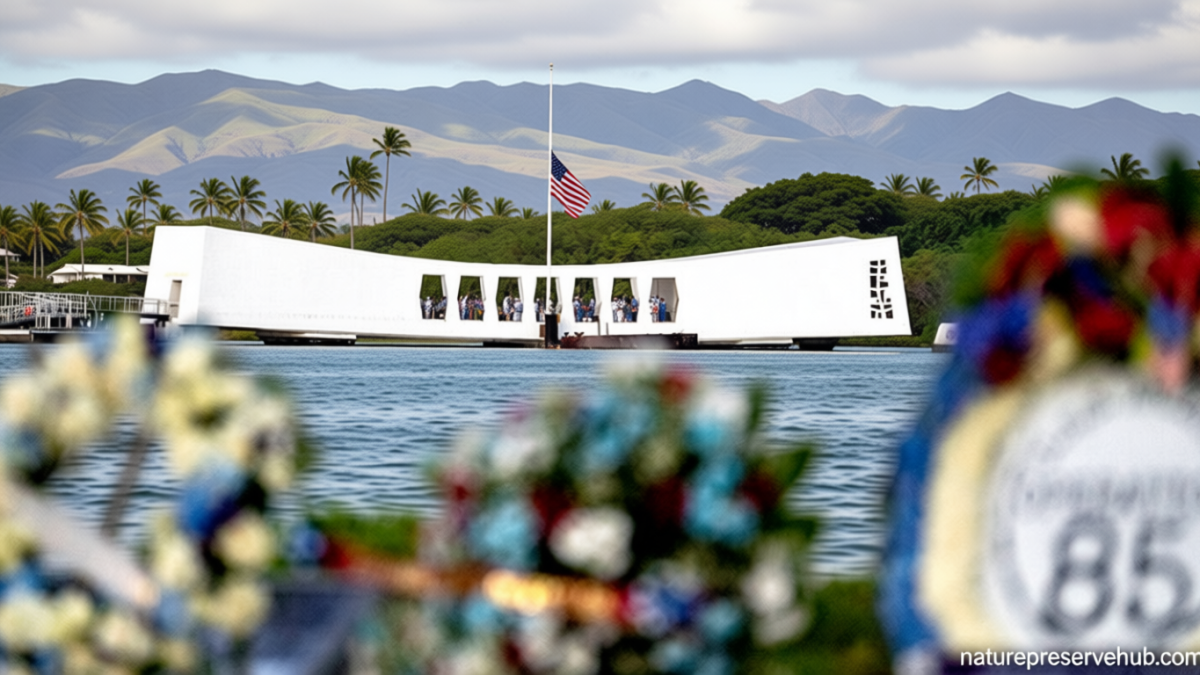
The USS West Virginia, which Royle served on, was stationed at Ford Island in 1941 when Japanese aircraft launched a coordinated assault on the U.S. naval base. The ship suffered multiple torpedo hits and sank to the shallow harbor floor, claiming the lives of 106 crew members, including Royle. His name was originally memorialized on the Courts of the Missing at the National Memorial Cemetery of the Pacific, where the remains of unidentified service members are honored.
Royle’s identification was a milestone in the ongoing efforts to account for those lost in the attack. This process, which began with exhumation and modern testing, has allowed for a more personal tribute. The family, now able to celebrate his life with a proper burial, has been described as “remembered with pride and love,” as per the obituary. His nephews, Donald Bradford Henderson and John Luker, along with his niece Becky Downen Lensing, will be present to pay their respects.
84 Years of Commemoration and Connection
Eighty-four years after the attack on Pearl Harbor, Royle’s story has been intertwined with the broader narrative of the event. The identification of his remains not only completes his family’s story but also adds a new chapter to the historical accounts of the battle. This process highlights how technology and collaborative efforts can bring closure to long-standing mysteries, even after decades of uncertainty.
The National Memorial Cemetery of the Pacific has been a symbol of remembrance for countless service members, and Royle’s inclusion there was a significant step in his journey. However, his return to Arkansas signifies a more intimate and personal recognition of his sacrifice. The obituary, released by Cornwell Funeral Homes, serves as both a tribute and a testament to the enduring legacy of World War II veterans.
A Survivor’s Final Chapter
Royle’s story also intersects with that of another Pearl Harbor survivor, Bob Fernandez, who passed away nearly 83 years after the attack. At 100 years old, Fernandez’s death was marked by peace at home, offering a contrast to the tragedy that befell Royle and his fellow sailors. The lives of these individuals, separated by decades and events, are now linked by the shared memory of December 7, 1941, and the efforts to remember those lost that day.
Fernandez, who lived through the attack, became a living symbol of resilience and survivorship. His passing, while a personal loss, adds to the emotional weight of the 84th anniversary of the event. The identification of Royle’s remains, however, brings a sense of completion to the story of those who died in the attack, connecting past sacrifices with present-day honors.
Technology and Tradition in Unearthing the Past
The U.S. Navy’s role in the identification process is both historical and technical. The USS West Virginia, which was moored at Ford Island during the attack, was struck by torpedoes that led to its sinking. The ship’s final moments were marked by the chaos of battle, and its crew, including Royle, became part of the legacy that continues to be explored today. Modern DNA analysis has revolutionized the ability to identify remains, bridging the gap between past losses and present recognition.
Royle’s case exemplifies how forensic science, once a tool of limited scope, can now trace the identities of soldiers with remarkable precision. The exhumation of caskets for testing not only confirms who was lost but also provides a deeper understanding of the individuals who made the ultimate sacrifice. His story, like those of others, is now part of a broader narrative of perseverance and honor, spanning generations.
As the world continues to commemorate the events of December 7, 1941, Royle’s return home is a reminder of the personal stories behind the historical record. His family’s journey from uncertainty to celebration underscores the importance of remembering not just the scale of the attack but the individuals who lived and died in its shadow. The combination of military tradition and modern technology has enabled this long-awaited tribute, ensuring that Royle’s service is never forgotten.
Royle Bradford Luker’s identification after 82 years is a powerful illustration of how advancements in science can revisit the past and provide closure. His story, once lost to time, now stands as a beacon of hope for others whose identities may still be in question. The ceremony in Arkansas will not only honor his life but also reaffirm the values of service, sacrifice, and family that defined his journey from the moment he joined the Navy.
Through DNA analysis, the Defense POW/MIA Accounting Agency has been able to bring clarity to the remains of soldiers who died during World War II. Royle’s case, like many others, highlights the meticulous work required to ensure that every individual who served is accounted for. His burial on May 30 will mark the end of a long journey but the beginning of a renewed celebration of his life and contributions to the nation’s history.