
US, Shield of the Americas Condemn ‘Ongoing Efforts’ to Overthrow Bolivia’s Elected President Amid Unrest
Joint Statement Targets Attempts to Undermine Democratic Leadership
US Shield of the Americas condemn – On Friday, the United States and its allies within the Shield of the Americas issued a sharp rebuke of efforts to destabilize the government of Bolivia’s newly elected president, Rodrigo Paz. The alliance, comprising Argentina, Bolivia, Chile, Costa Rica, Dominican Republic, Ecuador, El Salvador, Guyana, Honduras, Panama, Paraguay, and Trinidad and Tobago, issued a unified declaration condemning the persistent attempts to remove Paz from power. The statement emphasized that the current administration was elected through a legitimate and overwhelming majority, underscoring the importance of preserving democratic institutions.
“The member countries of the Shield of the Americas denounce ongoing efforts to overthrow the legitimately and overwhelmingly elected government of President Rodrigo Paz in Bolivia,” the declaration stated. “We stand with Paz’s democratic government as it fights back against attempts to drag Bolivia backwards through cynical efforts to prevent the delivery of food, medicine, and other vital supplies to the Bolivian people through fake road blockades.”
The coalition also criticized the use of “mob rule” as a means to replace the will of the people, highlighting the need for accountability in political movements. It specifically called out those funding protests with “dirty money” from drug trafficking and transnational crime, urging them to face consequences for their actions. Meanwhile, the government was urged to engage in dialogue with those who have valid concerns, while denouncing actors who exploit these grievances to seize control.
Unrest in La Paz Sparks Concern Over Economic Pressures
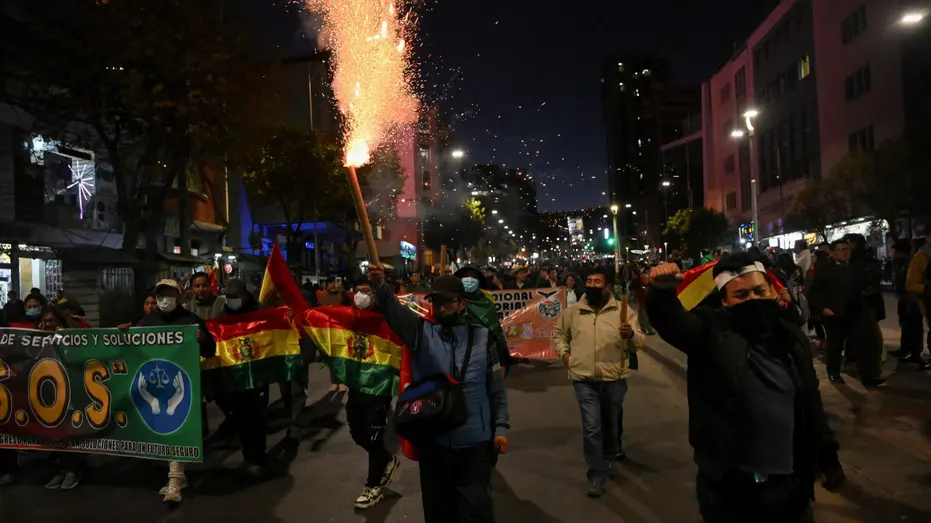
Bolivia’s capital, La Paz, has experienced weeks of social upheaval, with mass protests disrupting urban centers and challenging the new administration. The unrest has been fueled by rising inflation and the sharp increase in fuel prices, which have placed significant financial strain on citizens. Reports indicate that motorists have raised complaints about gasoline contamination, alleging that the fuel has damaged vehicles and exacerbated public frustration.
The turmoil has led to the resignation of Bolivia’s Defense Minister, Marcelo Salinas, who stepped down earlier this week. His departure followed months of internal conflict within the military, as troops became divided over their role in supporting or opposing the government. Analysts suggest that the unrest reflects broader discontent with Paz’s economic policies, including his decision to abolish fuel subsidies, which caused prices to spike by nearly 90%.
Land Reform and Fuel Policies as Catalysts for Protests
Upon assuming office, President Paz implemented a land reform bill aimed at strengthening agribusiness, a move that drew criticism from Indigenous communities. Advocates for Indigenous farmers warned that the legislation could threaten their livelihoods and lead to forced displacement. This policy shift, combined with the removal of fuel subsidies, has intensified public anger and contributed to the current crisis.
Protesters have accused the government of neglecting the needs of vulnerable populations, with some claiming that the administration prioritized economic reforms over social welfare. The fake road blockades, which have been used to restrict the flow of essential goods, have been portrayed as a deliberate strategy to undermine the government’s ability to address the nation’s economic challenges.
Trump Administration Links Unrest to Drug Traffickers
The Trump administration has positioned itself as a key player in the crisis, asserting that drug traffickers are responsible for inciting the mass protests. Officials argue that these actors are leveraging economic instability to destabilize Bolivia and expand their influence in the region. This narrative aligns with the broader goal of combating narco-terrorism, a theme that has been central to U.S. foreign policy in South America.
As part of its strategy, the U.S. has intensified support for the Americas Counter Cartel Coalition (A3C), a recently established military and political alliance. The coalition’s formation is seen as a response to the growing threat of drug cartels and their ties to political unrest. The A3C’s mission includes coordinating efforts to dismantle criminal networks and protect democratic governance across the continent.
Evo Morales Calls for Early Elections Amid Coup Allegations
Former President Evo Morales, who served as Bolivia’s first Indigenous leader for an unprecedented 14 years, has emerged as a vocal critic of the current government. Morales, now in hiding in the central coca-growing Chapare region, has accused the administration of undermining Bolivia’s democratic processes and returning to the status quo of corruption. He has called for early elections, arguing that they are the only way to restore public trust in the political system.
Morales has faced allegations of human trafficking, specifically related to his alleged involvement with a 15-year-old girl. These charges, he claims, are politically motivated and part of a campaign to discredit his leadership. Despite his efforts to rally support from opposition groups, Morales remains a key figure in the ongoing power struggle, with his movement gaining traction among those who feel marginalized by the new administration.
Pete Hegseth Warns of Narco-Terrorist Influence in the Region
On Thursday, War Secretary Pete Hegseth reiterated the U.S. commitment to Bolivia’s democratic government, warning of the threat posed by narco-terrorists. In a post on X, Hegseth stated, “The United States is watching. Bolivia must not allow itself to fall prey to the old status quo of narco-terrorist dominance in the region.” He emphasized that the Americas Counter Cartel Coalition (A3C) would continue to support Bolivia in its fight against criminal elements seeking to exploit economic and political instability.
Hegseth’s remarks highlight the U.S. strategy of linking the current unrest to transnational criminal organizations. By forming the A3C, the U.S. aims to strengthen regional partnerships and create a unified front against narco-terrorism. This alliance is intended to prevent the exploitation of democratic processes by groups that benefit from chaos and death, as they have historically done in other parts of Latin America.
The crisis in Bolivia has become a focal point for international attention, with the U.S. and its allies demonstrating a clear stance against efforts to undermine the elected government. As the situation continues to evolve, the focus remains on ensuring that Bolivia’s democratic institutions remain resilient against external pressures. The government’s ability to navigate this turmoil will determine its success in addressing both economic and political challenges, while the role of former leaders like Morales will remain a critical factor in the ongoing debate over Bolivia’s future.