
Supreme Court allows telehealth and mail access to mifepristone for now
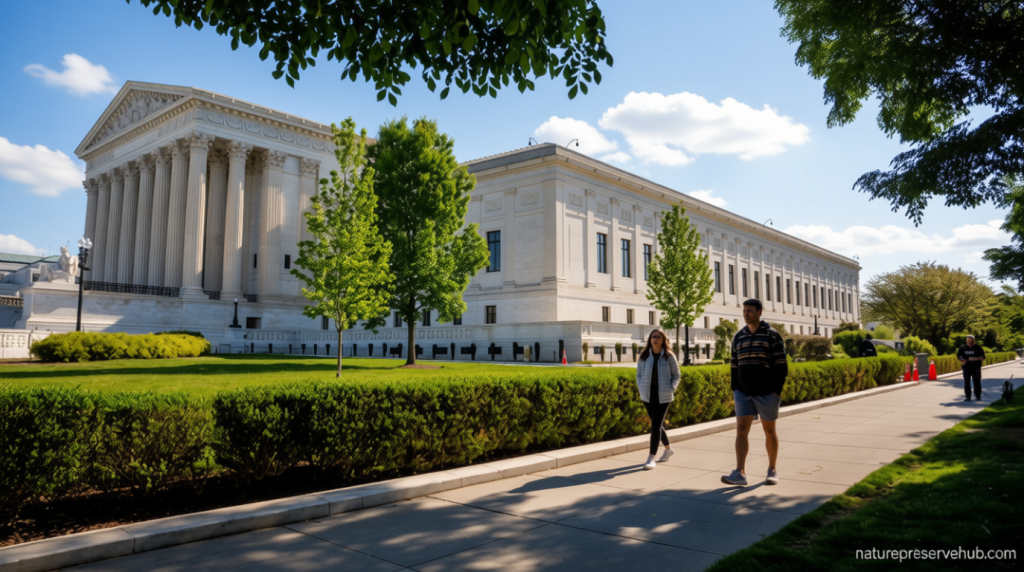
Supreme Court Allows Telehealth and Mail Access to Mifepristone for Now
Supreme Court allows telehealth and mail – On Thursday, the Supreme Court permitted women to maintain access to the abortion medication mifepristone via telehealth services, temporarily halting a stricter regulation that would have required in-person visits. This decision preserves the current availability of the drug, even as Louisiana officials pursue legal challenges to further restrict its use in lower courts. The ruling comes as the state’s appellate court prepares to evaluate the merits of Louisiana’s case against the FDA’s policies.
A Legal Pause in the Abortion Access Debate
The court’s action reversed a prior order from the 5th US Circuit Court of Appeals, which had mandated in-person visits for mifepristone. That requirement, imposed just before the end of the previous administrative stay, threatened to limit access for women in rural or remote areas. The Supreme Court’s intervention provided a temporary reprieve, allowing the drug to remain accessible through telehealth and mail-order methods.
The court did not specify its reasoning or reveal the vote count, leaving the decision’s rationale ambiguous. Justices Clarence Thomas and Samuel Alito expressed their disagreement in separate dissents. Alito criticized the court’s “unreasoned order,” arguing it delayed the implementation of stricter abortion rules. He framed the decision as an effort to “undermine our ruling” in Dobbs v. Jackson Women’s Health Organization, which overturned the constitutional right to abortion established by Roe v. Wade in 1973.
Thomas’s Dissent: A Criminal Enterprise?
Thomas, in a solo dissent, contended that the FDA’s approval of mifepristone via telehealth violated a 19th-century law prohibiting the mailing of abortion drugs. He claimed this law, combined with Louisiana’s abortion ban, prevented manufacturers from seeking judicial intervention. “They cannot, in any legally relevant sense, be irreparably harmed by a court order that makes it more difficult for them to commit crimes,” Thomas wrote, suggesting that the companies’ financial losses from restricted access were not sufficient grounds for a stay.
The ruling’s timing was notable, as it followed the expiration of an earlier administrative stay that had expanded access to mifepristone. The decision came nearly half an hour after that stay ended, underscoring the urgency of the legal battle. While the Supreme Court’s action kept the status quo, it also set the stage for the case to move back to the New Orleans-based 5th Circuit, where the final judgment will be determined.
Mifepristone and the Shift in Abortion Access
Since the pandemic, women have relied on telehealth appointments to obtain mifepristone, a critical component of medication abortion. The FDA finalized this arrangement in 2023, eliminating the need for in-person visits. However, the reversal of Roe v. Wade in 2022 spurred conservative states to implement or strengthen restrictions on clinic-based abortions, increasing demand for telehealth alternatives.
According to the Guttmacher Institute, medication abortions account for over 60% of all procedures in the US. This method has become particularly vital in states where in-clinic access is limited. The Society of Family Planning reported that approximately 25% of abortions nationwide were conducted via telehealth in 2025, a significant rise from fewer than 10% in 2022. These figures highlight the growing reliance on remote options for reproductive care.
Impact of the Ruling on the Abortion Landscape
While the decision temporarily maintains access, it does not resolve the broader dispute over mifepristone’s legality. Louisiana’s challenge aims to permanently curtail its use, potentially setting a precedent for other states to follow. The case has become a focal point in the ongoing fight over abortion rights, with both sides seeking to influence the Supreme Court’s final verdict.
Anti-abortion advocates have criticized the ruling, arguing it allows the status quo to persist. Gavin Oxley of Americans United for Life stated that the order “only further prolongs the full effects of overturning Roe v. Wade.” He emphasized that the decision fails to fully return control of abortion access to state legislatures, leaving the issue unresolved for the American public.
Mifepristone: A Safe and Effective Option
Mifepristone, often referred to as the abortion pill, is considered safer than many common prescription medications. Data from the FDA as of 2023 indicated that only five deaths were linked to its use for every 1 million people who took it since its approval in 2000. This safety profile has made it a preferred choice for many women, particularly in areas with limited healthcare infrastructure.
Nancy Northup of the Center for Reproductive Rights underscored the importance of mifepristone, stating that “for patients hundreds of miles from the nearest clinic, it’s the difference between getting an abortion or not.” She criticized the court’s decision as a “temporary reprieve” that does not address the deeper concerns of women seeking care. “This order buys time, but no peace of mind,” she added, highlighting the emotional and practical stakes for those relying on the drug.
The Path Ahead for the Case
The Supreme Court’s refusal to accept arguments in the case means the legal battle will proceed through the federal appeals court system. This development could lead to a final decision in Louisiana, which may then be appealed to the high court again. The outcome of this process could determine whether mifepristone remains available nationwide or faces stricter limitations.
As the case moves forward, the broader implications for abortion access remain unclear. While the current ruling prevents immediate restrictions, it also keeps the issue alive for future litigation. The 5th Circuit’s decision will be pivotal, as it could either uphold the FDA’s policies or pave the way for a more stringent approach. For now, women in Louisiana and across the country can continue to use mifepristone through remote channels, but the long-term legal landscape remains uncertain.
Political Reactions and Future Prospects
Louisiana Attorney General Liz Murrill, a Republican, described the Supreme Court’s decision as “shocking,” pledging to continue the fight against the drug’s availability. Her stance reflects the state’s commitment to limiting abortion access, even as the federal courts provide temporary relief. Other anti-abortion groups echoed her concerns, viewing the ruling as a compromise that delays but does not eliminate the threat to abortion rights.
The case has also drawn attention to the role of the FDA in shaping abortion access. Its approval of telehealth methods for mifepristone has been a key factor in maintaining widespread availability. However, Louisiana’s challenge argues that the FDA overstepped its authority by allowing remote access, especially in the wake of the Dobbs decision. The dispute underscores the tension between federal oversight and state-level restrictions in the abortion rights debate.
As the legal process unfolds, the Supreme Court’s stance on mifepristone will likely influence its broader approach to abortion policy. The decision to pause the 5th Circuit’s ruling demonstrates the court’s willingness to intervene in state-level challenges, even as it leaves the final judgment to lower courts. This dynamic could shape the future of abortion access in the US, depending on how the case is resolved.
“The court’s unreasoned order granting stays in this case is remarkable,” Alito wrote in his dissent. “What is at stake is the perpetration of a scheme to undermine our decision overturning Roe v. Wade four years ago.”
“This isn’t a matter of convenience — for patients living hundreds of miles from the nearest clinic, it’s the difference between getting an abortion or not,” said Nancy Northup, president and CEO of the Center for Reproductive Rights. “That’s exactly why anti-abortion activists want to ban this lifeline nationwide.”
The Supreme Court’s latest action marks a critical moment in the fight over abortion access, balancing immediate relief for patients against the potential for long-term restrictions. As the case progresses through the appeals system, the drug’s availability will remain a flashpoint in the ongoing political and legal battle over reproductive rights.
