
El Niño is coming faster than expected and chances are rising that it will be historically strong
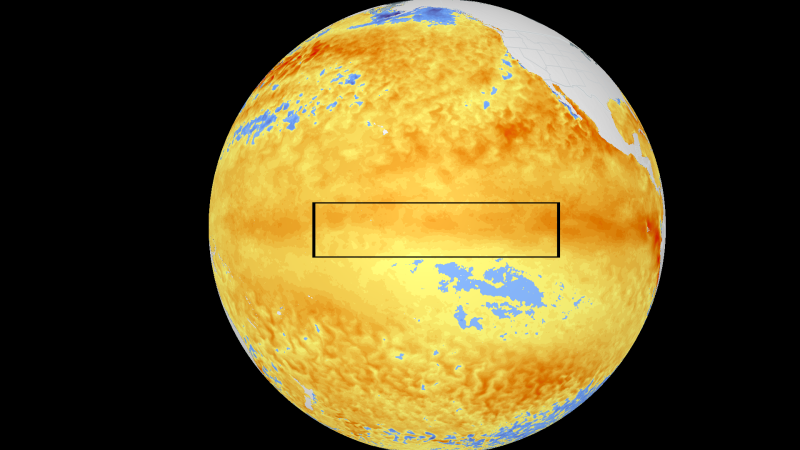
El Niño Accelerating: Chances of a Historically Strong Event Rise
El Niño is coming faster than previously anticipated, with recent updates from NOAA’s Climate Prediction Center suggesting an accelerated development of the phenomenon in the Pacific Ocean. The latest data shows a heightened probability of the event reaching super-strength levels by late fall or winter, shifting forecasts from earlier predictions of neutral conditions. This rapid progression highlights the dynamic nature of climate systems and the growing concern over its potential impact on global weather patterns.
El Niño’s Climate Dynamics and Global Impacts
El Niño is a recurring climate pattern marked by the warming of the central and eastern equatorial Pacific, which disrupts typical atmospheric and oceanic conditions. As part of the El Niño-Southern Oscillation (ENSO) cycle, it can significantly alter weather systems worldwide. During strong El Niño events, regions like the Americas and Southeast Asia often experience intensified droughts and heatwaves, while the Pacific and parts of Africa may see increased rainfall and storm activity. Additionally, the phenomenon can suppress hurricane formation in the Atlantic, influencing tropical storm seasons.
The current El Niño is expected to peak in the Northern Hemisphere’s winter, with models indicating a 96% chance of persistence through that period. This near-certainty is driven by rising warm water temperatures in the central and eastern Pacific, which are steadily approaching the 0.5°C threshold for a strong event. While the exact magnitude remains uncertain, the accelerating trend suggests a possible Super El Niño, a category that could rival historical extremes like the 1982-1983 and 1997-1998 episodes.
“The likelihood of a very strong El Niño has increased significantly, but its peak strength still depends on atmospheric conditions aligning with oceanic trends this summer,” explained Michelle L’Heureux, a lead scientist at the Climate Prediction Center. “If these factors converge, we could witness a Super El Niño that has the potential to reshape global climate outcomes.”
Historical Precedents and Climate Trends
Super El Niño events are rare but powerful, characterized by equatorial Pacific temperatures rising more than 2°C above the long-term average. The 2015-2016 cycle stands as the most recent example, marking the strongest El Niño since the 1950s. Historical data reveals that such events often coincide with extreme weather phenomena, from devastating floods in South America to severe wildfires in Australia. The 1997-1998 event, for instance, contributed to record-breaking global temperatures, underscoring El Niño’s role in amplifying climate change effects.
As the current El Niño progresses, its influence on global temperatures is expected to intensify. Scientists warn that if the event reaches its projected peak, it could push 2026 or 2027 into the top ranks of the warmest years on record. This projection aligns with broader climate trends, as the warming of the Pacific Ocean interacts with anthropogenic climate change to create a feedback loop of rising global temperatures. While the exact strength of the current event is still under evaluation, the accelerated development signals a shift in the climate system’s trajectory.
Regional Weather Changes and Ecological Effects
El Niño’s impact varies regionally, with some areas facing heightened risks of drought while others brace for heavy rainfall. For example, the Caribbean and parts of the eastern Pacific may experience reduced hurricane activity, whereas regions like Hawaii and Southern California could see more frequent and intense storms. These changes can disrupt agriculture, affect water resources, and influence migration patterns of wildlife.
Meanwhile, the central and eastern Pacific regions might face increased precipitation, leading to potential flooding in coastal areas and mountainous terrain. In the Americas, El Niño can exacerbate wildfire conditions, particularly in the western United States, while Southeast Asia and parts of Africa could experience prolonged dry spells. The combination of these effects, coupled with the rapid intensification of the El Niño, presents a complex challenge for climate adaptation and disaster preparedness across the globe.
