
CIA Director John Ratcliffe meets with Cuban officials in Havana
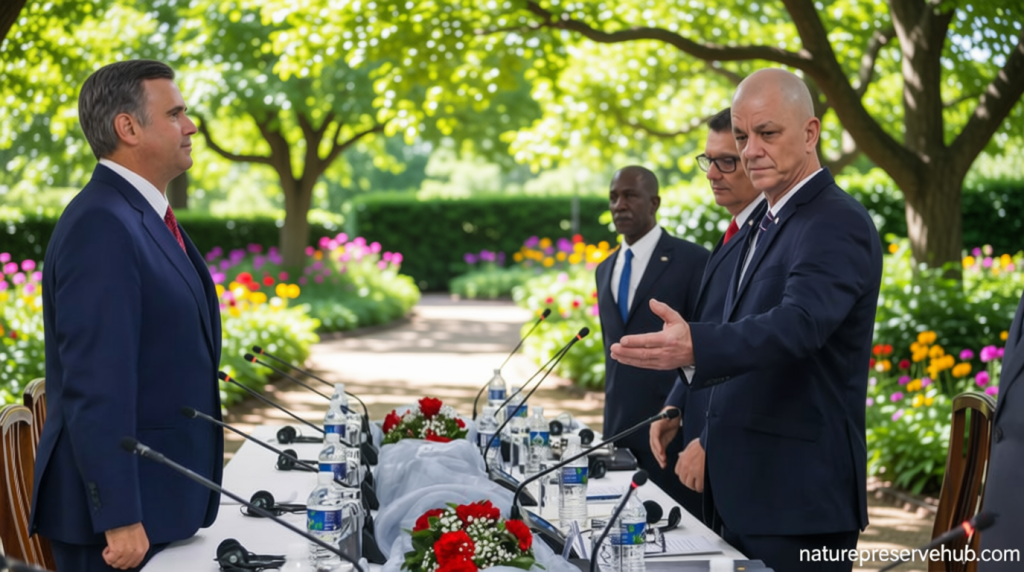
CIA Director John Ratcliffe Meets Cuban Officials Amid Escalating Tensions
CIA Director John Ratcliffe meets – On Thursday, CIA Director John Ratcliffe arrived in Havana, leading a US delegation to engage with Cuban government officials. The visit, which took place during a period of intensified US-Cuba diplomatic friction, followed months of economic strain and a critical energy crisis gripping the island. Cuban authorities announced the meeting in a statement, citing the US government’s request to host the delegation. This exchange marks a significant step in recent efforts to rekindle dialogue between the two nations, despite historical distrust.
The meeting occurred at a time when Cuba faces a severe energy shortfall, exacerbated by US sanctions and a prolonged oil blockade. According to the Cuban government, the Revolutionary Directorate agreed to the visit after the US delegation’s request was formally submitted. This decision underscores the growing urgency for Cuba to secure energy resources, as its power grid struggles to maintain stability. The encounter also highlights the complex relationship between the United States and Cuba, with the CIA—long accused by Havana of undermining its revolutionary legacy—now playing a central role in diplomatic discussions.
Cuba does not constitute a threat to the national security of the US, and there are no legitimate reasons to include it on the US’s list of State Sponsors of Terrorism.
The Cuban delegation emphasized these points during the meeting, refuting longstanding US allegations that the country harbors, supports, or funds terrorist activities. They also denied hosting foreign military or intelligence bases, a claim the US has previously used to justify its sanctions. Despite these assertions, the US delegation remains critical of Cuba’s governance model, pushing for reforms that align with its economic interests.
News of the meeting coincides with recent statements from US President Donald Trump, who suggested his administration was preparing to engage with Cuba. In a Truth Social post, Trump referred to the island as a “failed country” seeking assistance amid a deepening economic crisis. “Cuba is asking for help, and we are going to talk!!! In the meantime, I’m off to China!” he wrote, signaling a potential shift in US policy toward the Caribbean nation. This remark comes after the Trump administration has escalated sanctions against Cuba, including a series of measures aimed at pressuring Havana into a political agreement.
Recent weeks have seen the US intensify its diplomatic and economic pressure on Cuba. The State Department has been conducting intelligence-gathering flights off the island’s coast, while sanctions have targeted Cuban state-owned enterprises and restricted financial transactions. These actions have further strained relations, yet the meeting with Ratcliffe suggests a willingness to explore cooperation. Cuban officials have noted that their access to oil has been limited to a single shipment from Russia since late March, leaving the country vulnerable to energy shortages.
Cuban Minister of Energy and Mines Vicente de la O Levy highlighted the severity of the crisis in a televised address. “Oil reserves that sustain our beleaguered electrical grid are all but spent,” he stated, adding that the US has cut off all oil shipments except for the Russian donation. The minister’s comments followed a day earlier when the State Department announced a $100 million aid package, including Starlink terminals to expand internet access and reduce the Cuban government’s monopoly on connectivity. This offer was framed as a way to support “meaningful reforms” to Cuba’s communist system, though it also raises questions about the US’s conditions for assistance.
If there is truly a willingness on the part of the United States government to provide aid … it will encounter no obstacles or ingratitude from Cuba.
Cuban President Miguel Díaz-Canel echoed this sentiment on X, expressing openness to receiving US aid while stressing the importance of lifting or easing the economic blockade. The president argued that the current sanctions have worsened the humanitarian situation, describing it as a “coldly calculated” consequence of US policy. This acknowledgment of mutual interests suggests that the meeting could serve as a turning point in the nations’ relationship.
Analysts note that the visit by Ratcliffe marks a departure from the previous administration’s hardline approach. Last month, a senior US delegation met with Cuban officials in Havana as part of Trump’s broader strategy to push for economic concessions. The meeting with Ratcliffe, however, appears to focus on energy and security issues, with both sides seeking to address immediate challenges. This shift may reflect a broader diplomatic realignment, as the US seeks to balance its criticisms of Cuban governance with the need for pragmatic cooperation.
While the focus of the meeting is on energy, the underlying themes of US-Cuba relations remain unchanged. The Cuban government has historically blamed the CIA for sabotaging its revolution, a claim that persists despite recent diplomatic overtures. Ratcliffe’s presence underscores the agency’s role in shaping US policy toward Havana, even as tensions reach their highest level since the Cold War era. The question now is whether this meeting will lead to lasting reforms or serve as a temporary gesture in a larger political game.
Meet ‘the Crab’: Why the US Keeps Talking with Raul Castro’s Bodyguard Grandson
Amid the unfolding diplomatic dynamics, a lesser-known figure has emerged in the spotlight: Raul Castro’s grandson, who has become a focal point in US-Cuba interactions. This individual, often referred to as “the Crab” in media circles, has played a key role in maintaining communication channels between the two nations. His presence in the Cuban delegation during recent talks highlights the intergenerational continuity in Cuba’s political strategies, as well as the US’s interest in engaging with figures who are perceived as more flexible in negotiations.
The Crab, whose full name is not widely publicized, is known for his close ties to the Cuban government and his role as a security advisor. His connection to the Castro family adds a layer of significance to the discussions, as he represents a bridge between Cuba’s revolutionary past and its current leadership. US officials have cited his influence in fostering dialogue, though the extent of his impact remains a subject of debate. The meeting with Ratcliffe could further elevate his profile, positioning him as a potential intermediary in future US-Cuba agreements.
Historically, the US has sought to leverage the Cuban government’s internal dynamics to advance its interests. The Crab’s involvement in recent talks reflects a broader pattern of using personal connections to navigate political challenges. While his role is not explicitly detailed in official statements, his presence underscores the importance of cultivating relationships with Cuban officials who may be more receptive to US demands. This strategy aligns with the administration’s goal of securing energy resources and economic stability for the island.
The visit also highlights the strategic value of maintaining diplomatic ties, even in times of conflict. As the US and Cuba grapple with their respective challenges, the potential for collaboration remains a key consideration. Ratcliffe’s engagement with Cuban officials could pave the way for future agreements, though the success of such efforts will depend on the willingness of both nations to compromise. The meeting serves as a reminder that even adversaries can find common ground when circumstances demand it.
In the weeks leading up to the visit, the US has demonstrated a renewed interest in Cuba’s energy sector. The State Department’s $100 million aid package includes not only technological support but also financial assistance to address the country’s energy needs. This move is part of a broader effort to alleviate Cuba’s crisis while advancing US policy objectives. The Cuban government, however, has remained cautious, emphasizing that any aid must be accompanied by a reduction in economic pressure.
The meeting in Havana has sparked renewed debate about the future of US-Cuba relations. While the Trump administration has focused on sanctions and pressure, the Biden administration has shown a more nuanced approach, blending criticism with the offer of assistance. This shift may signal a more collaborative tone, though the legacy of past conflicts continues to shape the dialogue. As Ratcliffe and his Cuban counterparts conclude their discussions, the outcome will be closely watched for its implications on both nations’ long-term strategies.
