
U.S. Military Conducts Targeted Strike in Eastern Pacific, Eliminating Three Suspected Narco-Terrorists
US military kills three narco terrorists – On June 18, the U.S. military executed a precision attack on a vessel operating in the Eastern Pacific, resulting in the deaths of three individuals classified as “narco-terrorists” by U.S. Southern Command (SOUTHCOM). The strike, part of a broader effort to disrupt drug-trafficking networks, occurred as part of a multi-month initiative spearheaded by the Trump administration. According to SOUTHCOM, the operation was carried out by Joint Task Force Southern Spear under the direction of commander Gen. Francis L. Donovan.
Operation Targets Vessels Linked to Cartel Networks
SOUTHCOM confirmed that the vessel targeted in the strike was navigating along established routes used for narcotics smuggling. “Intelligence indicated the ship was engaged in narco-trafficking operations and transiting through areas known for such activities,” the command stated in a released report. The military emphasized that the strike was designed to neutralize threats posed by designated terrorist organizations, though it did not disclose whether any survivors were on board.
“On June 18, at the direction of #SOUTHCOM commander Gen. Francis L. Donovan, Joint Task Force Southern Spear conducted a lethal kinetic strike on a vessel operated by Designated Terrorist Organizations,” SOUTHCOM said in a statement. “Intelligence confirmed the vessel was transiting along known narco-trafficking routes in the Eastern Pacific and was engaged in narco-trafficking operations,” the statement continued.
The operation followed a similar attack two days prior, in which one individual was killed and two others survived. SOUTHCOM has acknowledged these strikes as part of its intensified focus on cartel-connected groups, particularly those operating in the Eastern Pacific. The command noted that while the strikes have targeted suspected drug traffickers, they have not always provided detailed evidence linking the deceased to narcotics activities or confirming the vessels’ cargo.
Visual Evidence from the Strike
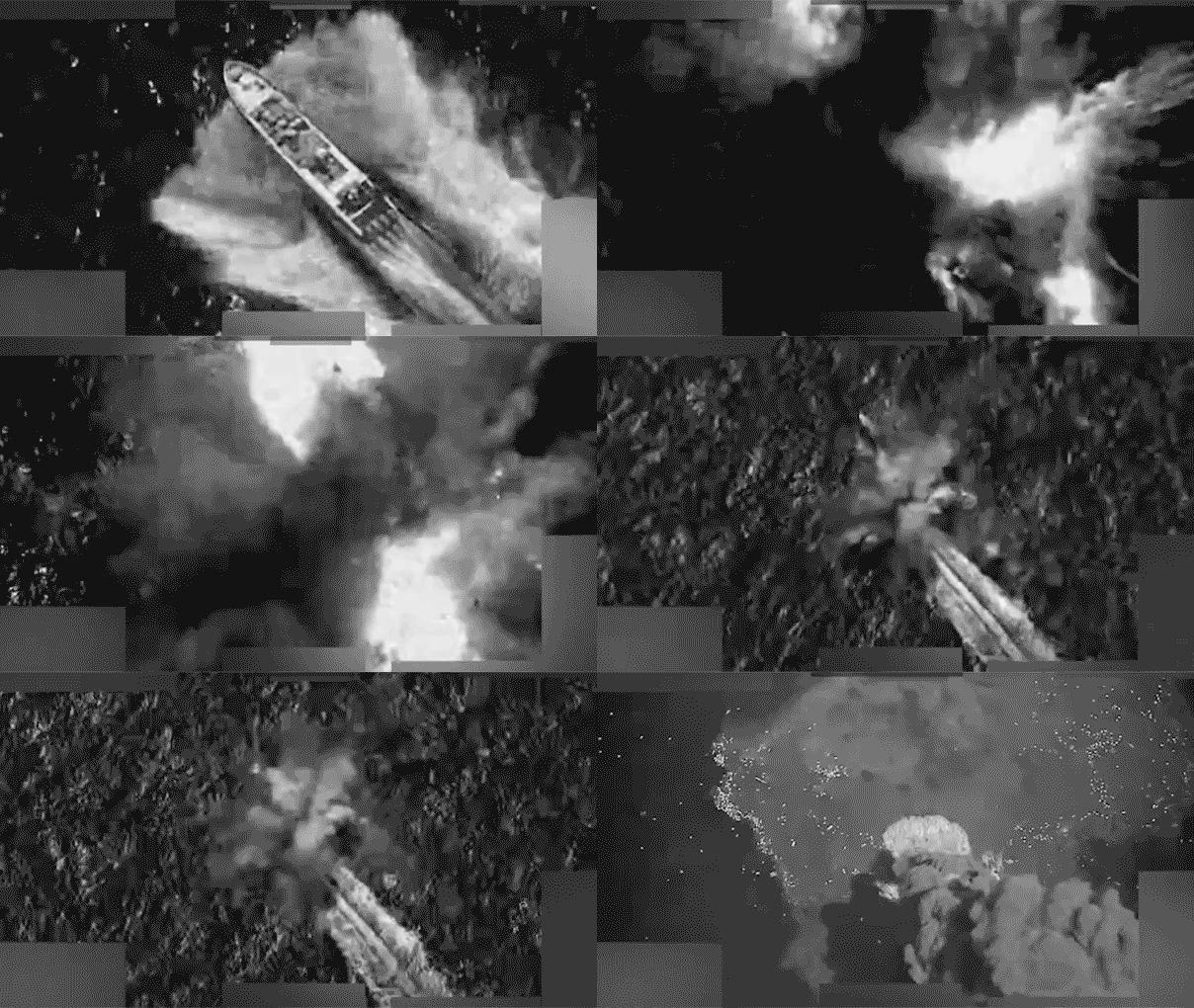
A short video released by SOUTHCOM captured the aftermath of the latest attack, showing the targeted vessel accelerating through the ocean before being hit by a missile and igniting in flames. Additional clips depicted floating debris and the vessel’s wreckage spreading across the water. The footage, while not specifying the exact location, highlighted the operation’s swift execution and the scale of destruction.
The video served as a visual confirmation of the strike’s success, but it also raised questions about the transparency of the military’s operations. Critics have pointed out that the command has yet to release detailed documentation on the identities of the victims or the specific narcotics being transported. Despite this, the military maintained that the action was justified under its authority to combat transnational criminal networks.
Broader Campaign Against Narco-Terrorist Networks
The strike marks the latest in a sustained campaign launched by the Trump administration to dismantle cartel-linked trafficking operations. Since September, U.S. forces have reportedly killed at least 211 individuals associated with these networks, according to The Associated Press. This figure includes the recent operation and prior strikes targeting suspected narco-terrorists in the region.
The initiative has drawn attention for its focus on small vessels, which are frequently used to transport drugs from South America to North America. The Eastern Pacific, a critical route for narcotics trafficking, has become a primary theater for these operations. SOUTHCOM has played a central role, coordinating strikes with local partners and leveraging intelligence to identify high-priority targets.
Controversy Over Legal Justification
Despite the military’s claims of necessity, the campaign has sparked debate among lawmakers, legal analysts, and human rights advocates. Critics argue that using lethal force against suspected traffickers outside traditional battlefields may be legally questionable. They highlight the lack of public evidence linking the killed individuals to terrorist activities, as well as the absence of clear documentation about the vessels’ cargo.
The White House has defended the approach, asserting that it has a strong case for targeting narco-terrorist groups. “The administration has presented an iron-clad argument for these strikes,” officials stated, emphasizing the connection between drug trafficking and terrorism. This stance aligns with the broader “war on cartels” strategy, which has seen increased U.S. involvement in Latin American waters.
Key Targets and Rewards for Information
The latest operation was part of efforts to neutralize the Tren de Aragua, a criminal group linked to narco-terrorism. President Donald Trump previously announced that SOUTHCOM had executed a “swift and lethal kinetic strike” that killed Héctor Rusthenford Guerrero Flores, also known as Niño Guerrero, the alleged leader of the organization. The Department of State had earlier offered a $5 million reward for information leading to his arrest or conviction.
While the military has not yet released detailed evidence of the strike’s success, the campaign has intensified under the Trump administration. The Associated Press reported that the combined toll of these operations has reached 211 fatalities, underscoring the scale of the effort. However, the lack of public transparency has left some questioning the effectiveness and necessity of these targeted killings.
SOUTHCOM’s strategy relies on intelligence to identify and strike vessels associated with drug-trafficking and terrorist activities. This method has allowed the command to act quickly, often without prior warning to the vessel’s crew. The Eastern Pacific remains a vital corridor for narcotics movement, with criminal organizations using small ships to bypass border controls and deliver illicit goods to U.S. shores.
As the campaign continues, the U.S. military faces growing scrutiny over its use of force. While officials argue that the strikes are essential to combatting drug-related violence and terrorism, critics warn of potential collateral damage and the need for clearer legal frameworks. The recent operations, including the latest lethal strike, highlight the ongoing conflict between national security interests and the rights of suspected individuals.
The role of the Coast Guard in these efforts has also been highlighted, with search teams deployed to investigate the aftermath of the strike. This collaboration underscores the combined approach of military and law enforcement agencies in targeting drug traffickers. However, the absence of specific details about the victims or the vessel’s cargo has left some gaps in the public record.
Overall, the U.S. military’s actions in the Eastern Pacific reflect a strategic shift toward preemptive strikes against suspected narco-terrorist networks. The campaign, while aimed at disrupting drug trafficking, has also drawn attention to the challenges of defining and prosecuting such threats. As the Trump administration continues its efforts, the focus remains on dismantling the organizations that fuel both the drug trade and extremist activities in the region.